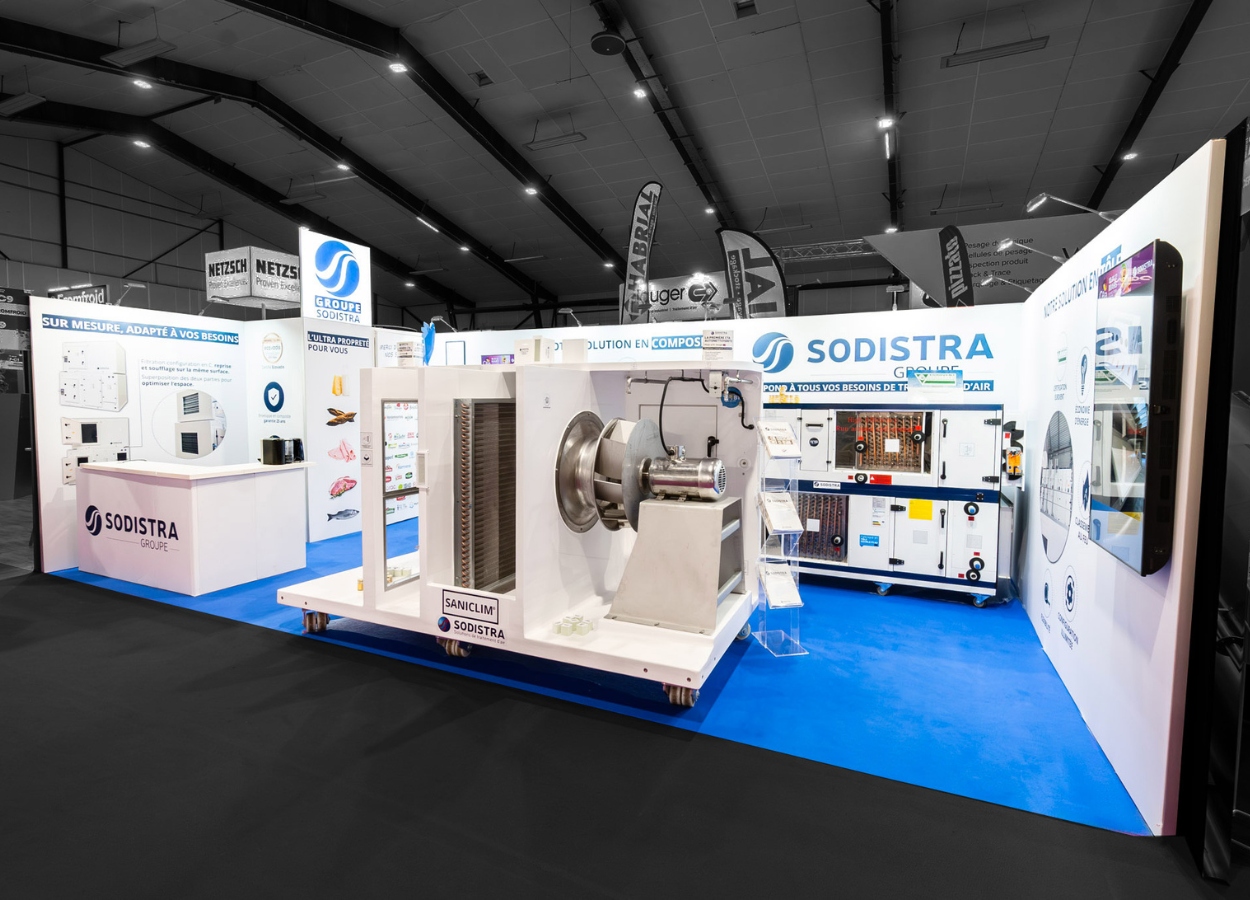
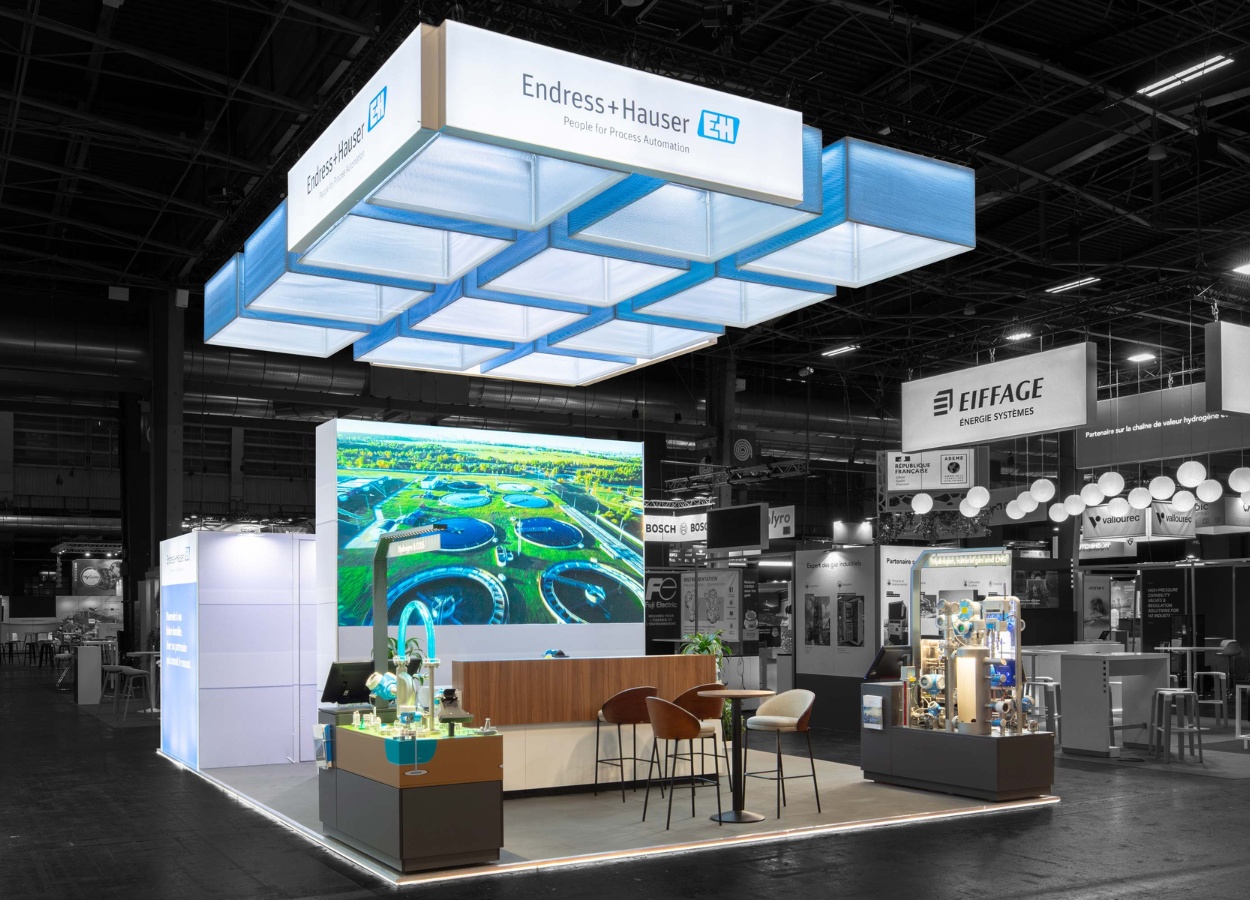
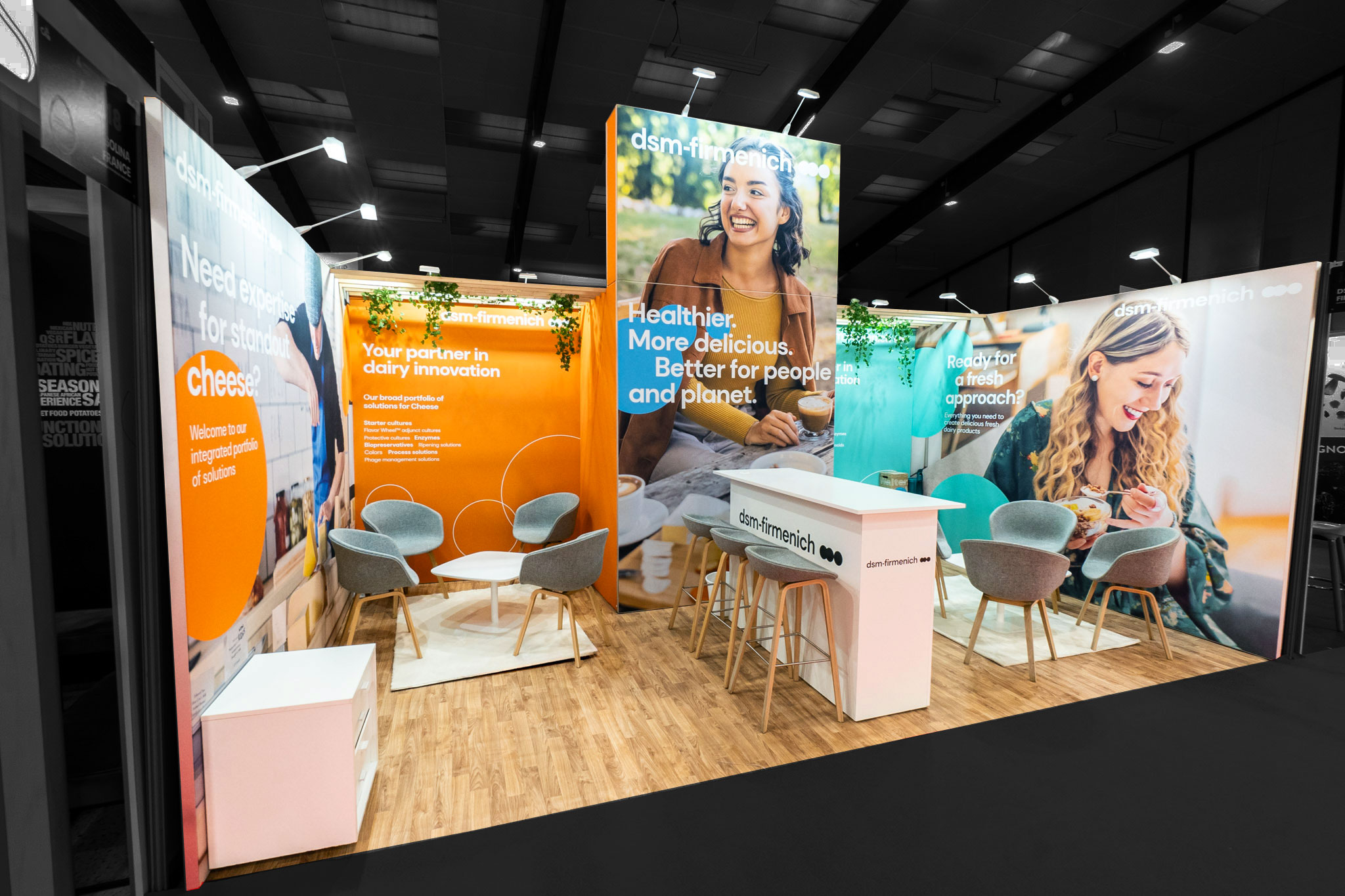
A modular stand is an exhibition structure composed of reusable and reconfigurable elements that allow a single setup to be adapted to different spaces and multiple professional events. It relies on a system of frames and transformable modules without complete reconstruction.
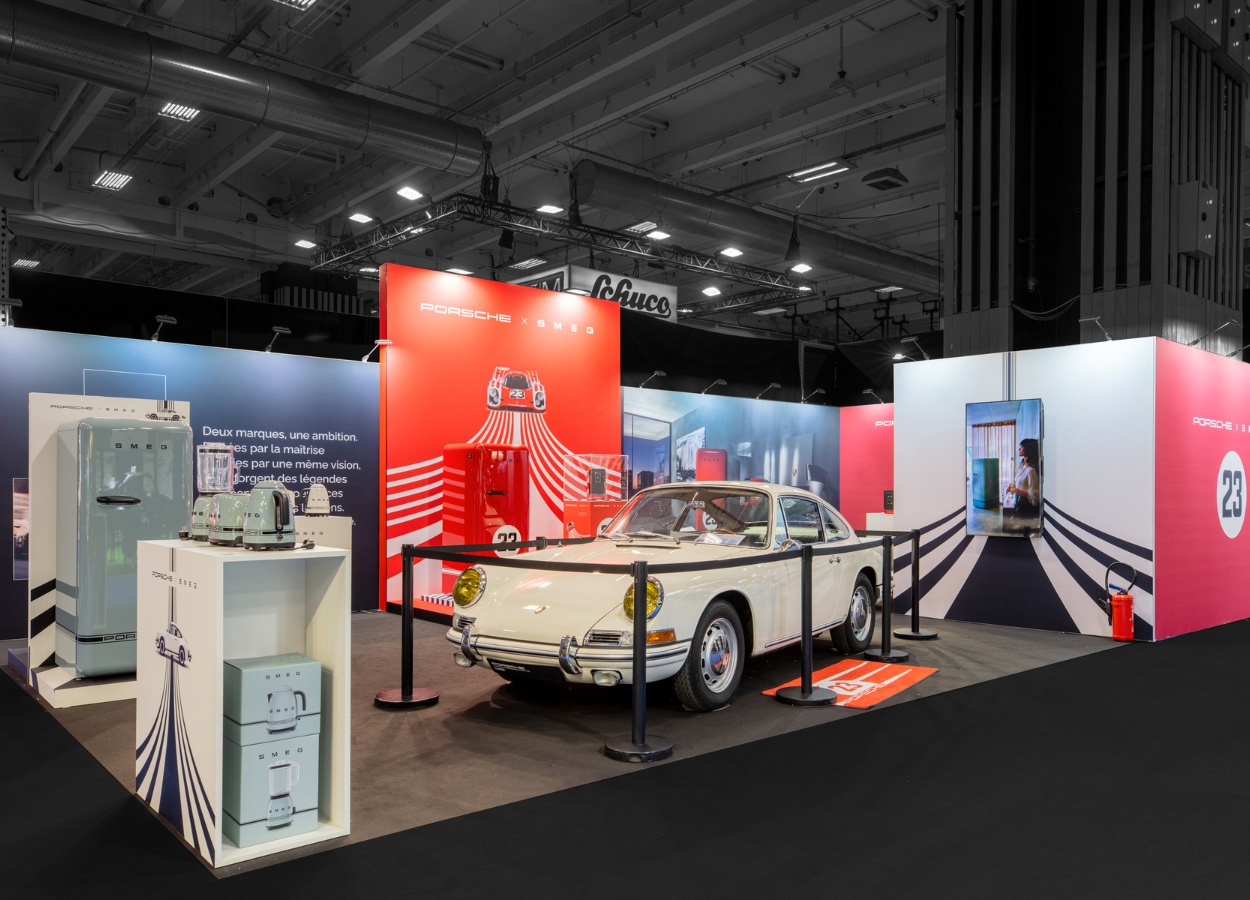
Unlike a stand designed for a single use, the modular stand is intended to evolve over time. It constitutes a durable structural base that can be adapted according to exhibition space and marketing objectives.
According to the UFI Global Exhibition Barometer 2025, Trade shows remain one of the most effective channels for generating qualified B2B leads. In this context, companies are looking to optimize their event presence across multiple events while controlling their investments.
It is in this evolution that modular solutions are experiencing notable growth. They allow for the structuring of a sustainable exhibition strategy while maintaining strong brand visibility.
To concretely understand how these structures are designed and deployed, Discover our solutions.
The modular stand appeals to companies because it combines flexibility, budget control, brand consistency, and eco-responsibility.
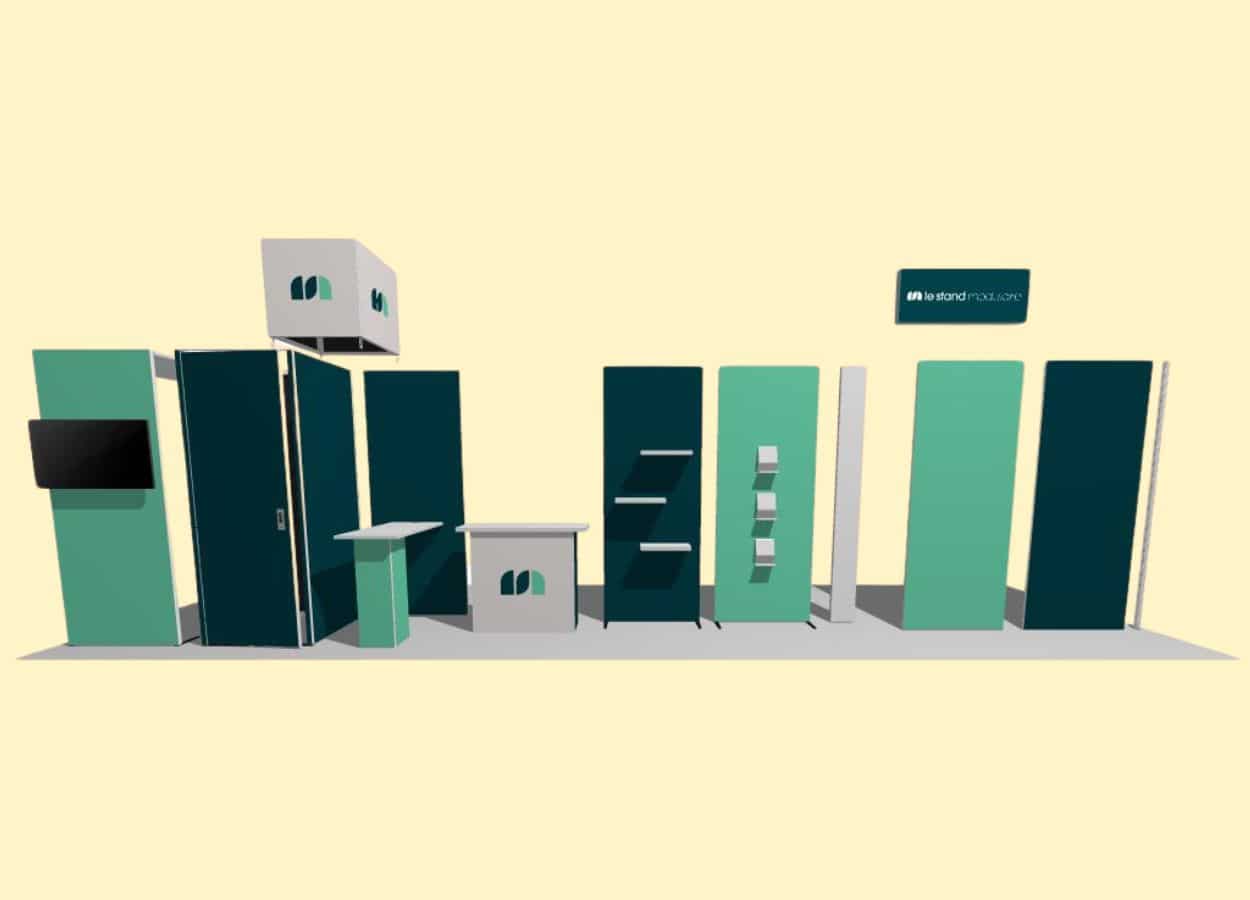
The principle of the modular stand is based on a set of standardized structural frames that can be assembled together. These frames form the main structure of the stand and serve as support for visuals, partitions, and equipment.
It's simple to use:
The structure is not recreated at each show. It is reconfigured.
The main elements include:
This architecture allows for the preservation of the base while modifying the layout.
👉 Examples of modular installations adapted to different surfaces can be seen in the Achievements section.
A modular stand can be designed to adapt to different layouts:
The same structure can be enlarged or reduced depending on the available space. This adaptability avoids having to start from scratch for each event.
Reconfigurability is one of the major advantages of modularity. It allows for optimizing initial investment and extending the lifespan of the stand.
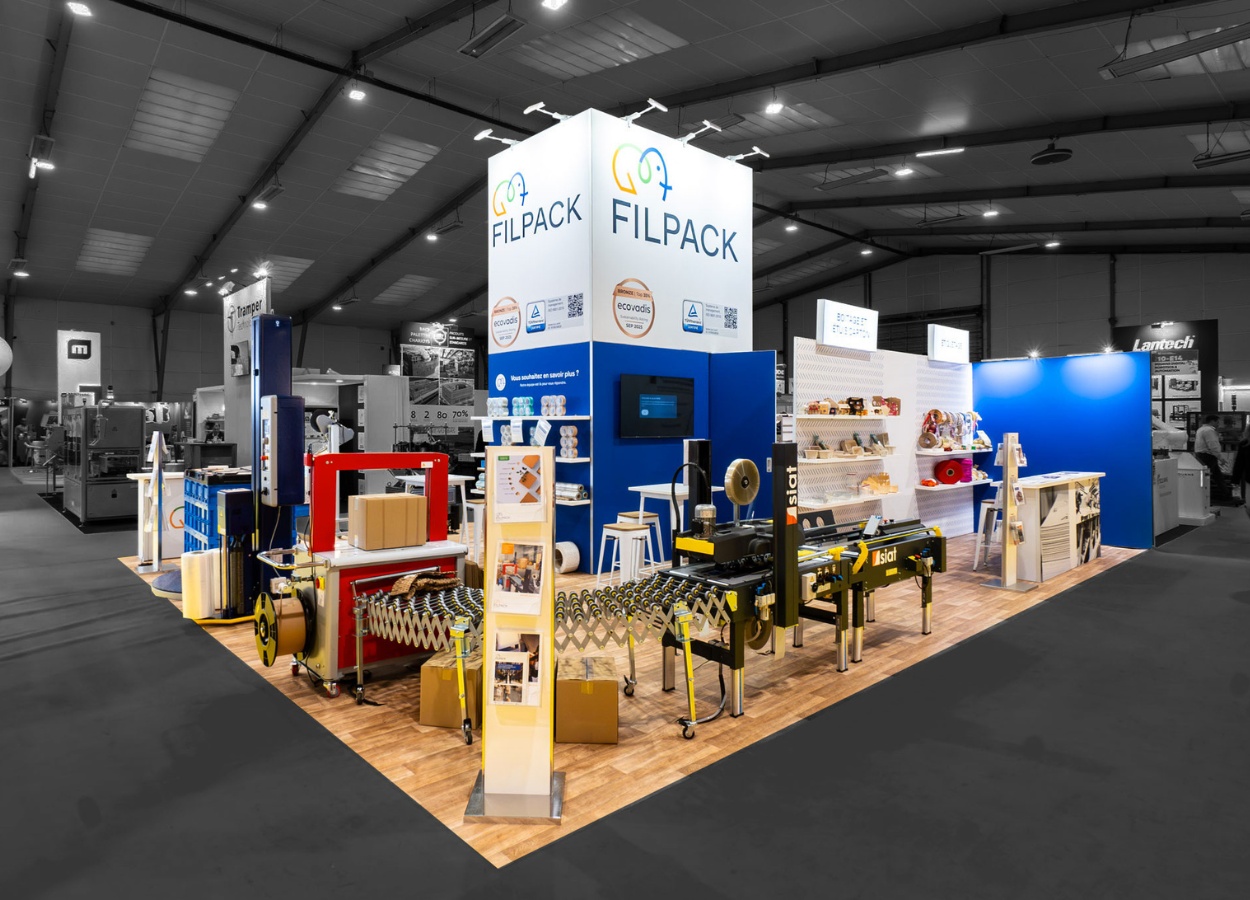
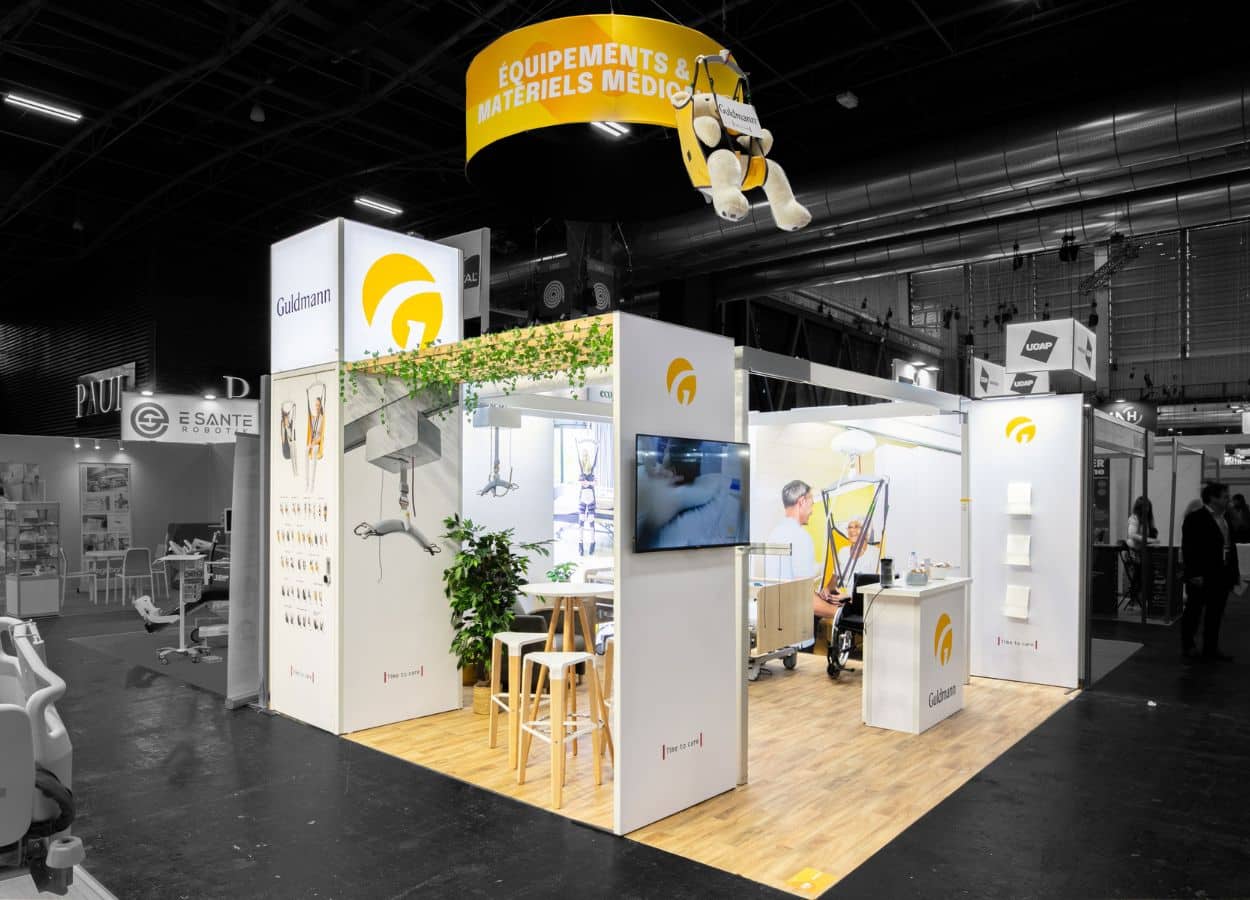
A modular exhibition stand is designed to be used at multiple trade shows. The initial investment is spread across several events.
This depreciation logic mechanically reduces the cost per lounge.
A stand reused five times per year for three years represents fifteen uses. The structural cost per event decreases significantly compared to a single design.
The modular stand thus transforms a one-time expense into a strategic investment.
According to the’Event Industry Trends Report published by EventMB, companies that regularly participate in events are increasingly looking to streamline their event investments by favoring reusable solutions.
To assess the relevance of a modular project based on your participation frequency, contact us for a personalized study.
The modular structure is generally lighter and optimized in volume. It is designed to be easily transported and stored without excessive bulk.
This design reduces:
Logistical simplification is a decisive advantage for companies participating in multiple trade shows per year.
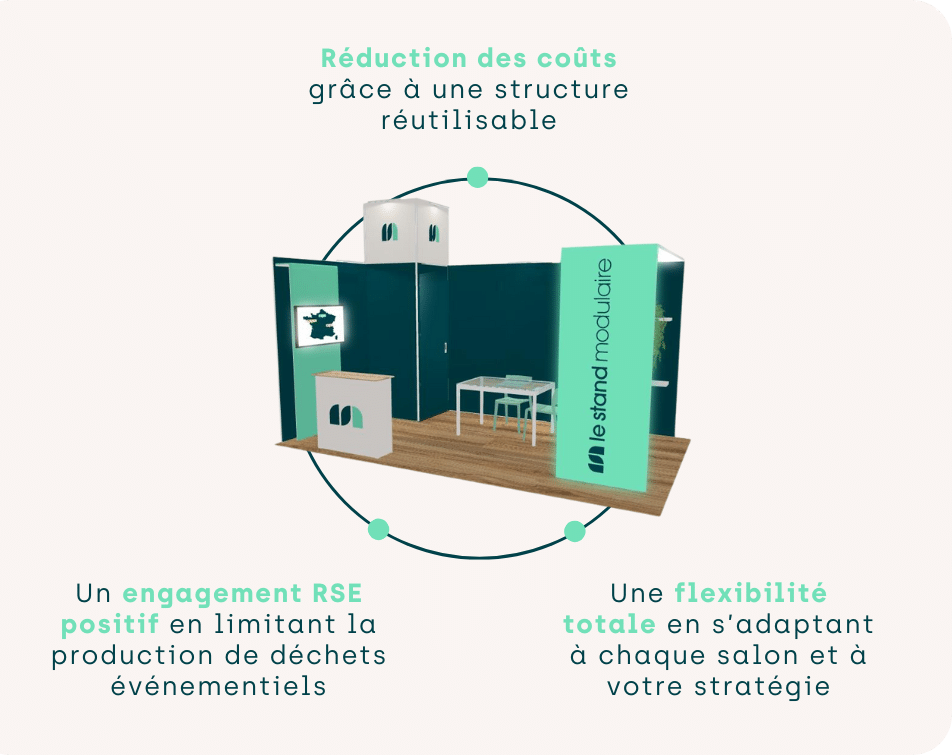
The modular stand offers continuous adaptability.
It can evolve according to:
These developments do not require a complete reconstruction. The foundation remains stable, while the peripheral elements evolve.
Participating in multiple trade shows requires maintaining a consistent visual identity.
The modular stand allows for a recognizable architecture to be adapted to different formats. This allows the brand to maintain strong visual continuity.
Repeating a coherent device improves memorization and strengthens credibility with visitors.
A modular stand is by definition more sustainable than a device designed for single use.
Reusing frames and structures limits post-event waste. Optimized volume reduces logistical impact. The extended lifespan of structural elements is part of a responsible approach.
According to a study published by UNIMEV (French Union of Event Professions), the reduction of the carbon footprint and the reuse of structures are now among the priorities for organizers and exhibitors.
Modular solutions directly address these new expectations by allowing for the extension of the lifespan of structures and limiting the production of single-use materials.
The question is not about choosing one against the other, but about understanding their complementarity.
A custom-built traditional stand is particularly suitable:
The modular stand becomes relevant when:
Many companies are adopting a hybrid strategy: a custom-built stand for a major event and a modular structure for recurring trade shows.
This approach allows for the combination of impact and streamlining.
The modular stand is particularly suitable:
It is also suitable for structures that wish to maintain a scalable foundation without starting from scratch each time.
The trade show market is evolving towards more flexibility and streamlining.
Companies are looking for:
The modular stand simultaneously addresses these five challenges.
It transforms event presence into a structured annual strategy rather than a succession of isolated actions.
The modular stand is a modern, flexible, and strategic solution for trade shows. It allows for budget optimization, simplified logistics, and the maintenance of brand consistency across multiple events.
It doesn't replace the traditional stand, but intelligently complements an overall event strategy.
In a context where companies participate in several trade shows per year, modular stands are emerging as a structuring lever for performance and sustainability.




©Stand Modulaire 2026 - Terms of use