The modular booth allows a company to participate in multiple trade shows per year with a single reconfigurable setup: same structure, variable surfaces, coherent visual identity, controlled cost per show.
For a long time, participating in several trade shows a year meant designing multiple different stands or reusing an aging setup that no longer fit available spaces.
Today, a third way exists. And the companies that have adopted it are not going back.
The modular stand, designed to be reconfigured, resized, and redeployed, fundamentally changes the logic of multi-show event strategy. It's no longer about managing individual participations on a case-by-case basis, but about building a cohesive asset that adapts to each context without being entirely rethought each time.
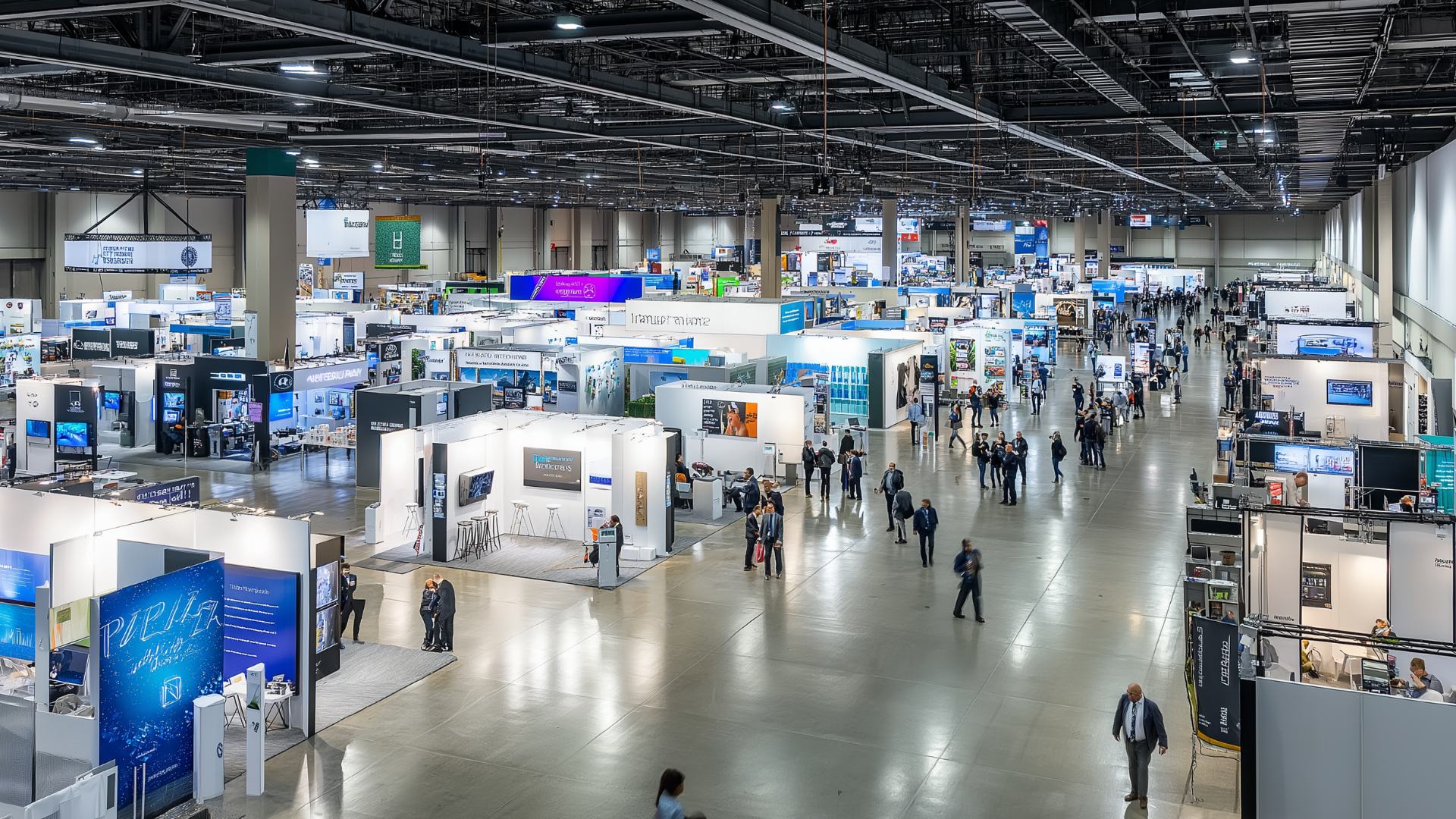
The presence at trade shows has intensified in many sectors. Food processing, pharmaceuticals, industry, tech... Companies now participate in 3, 5, sometimes 8 trade shows per year, in France and internationally.
This frequency changes the decision parameters. A booth designed for a single participation is amortized differently than a booth intended for six. The ratio between the initial investment and the cost per show changes radically according to this logic.
The question is no longer just "Which booth for this fair?" but "What setup for my entire event season?"
The same exhibitor might have a booth of 36 m² at a national trade show and then 80 m² at an international trade show. Both participations are part of the same strategy and require the same brand consistency. However, the spatial, logistical, and budgetary constraints are radically different.
It is precisely this variability that the modular stand is designed to absorb.
Do you have a 2026 trade show calendar to structure? Tell us about your project.
We are building the device tailored to your formats and objectives.
A modular system can be deployed on surfaces ranging from 6 m² to several hundred square meters with the same basic structural elements.
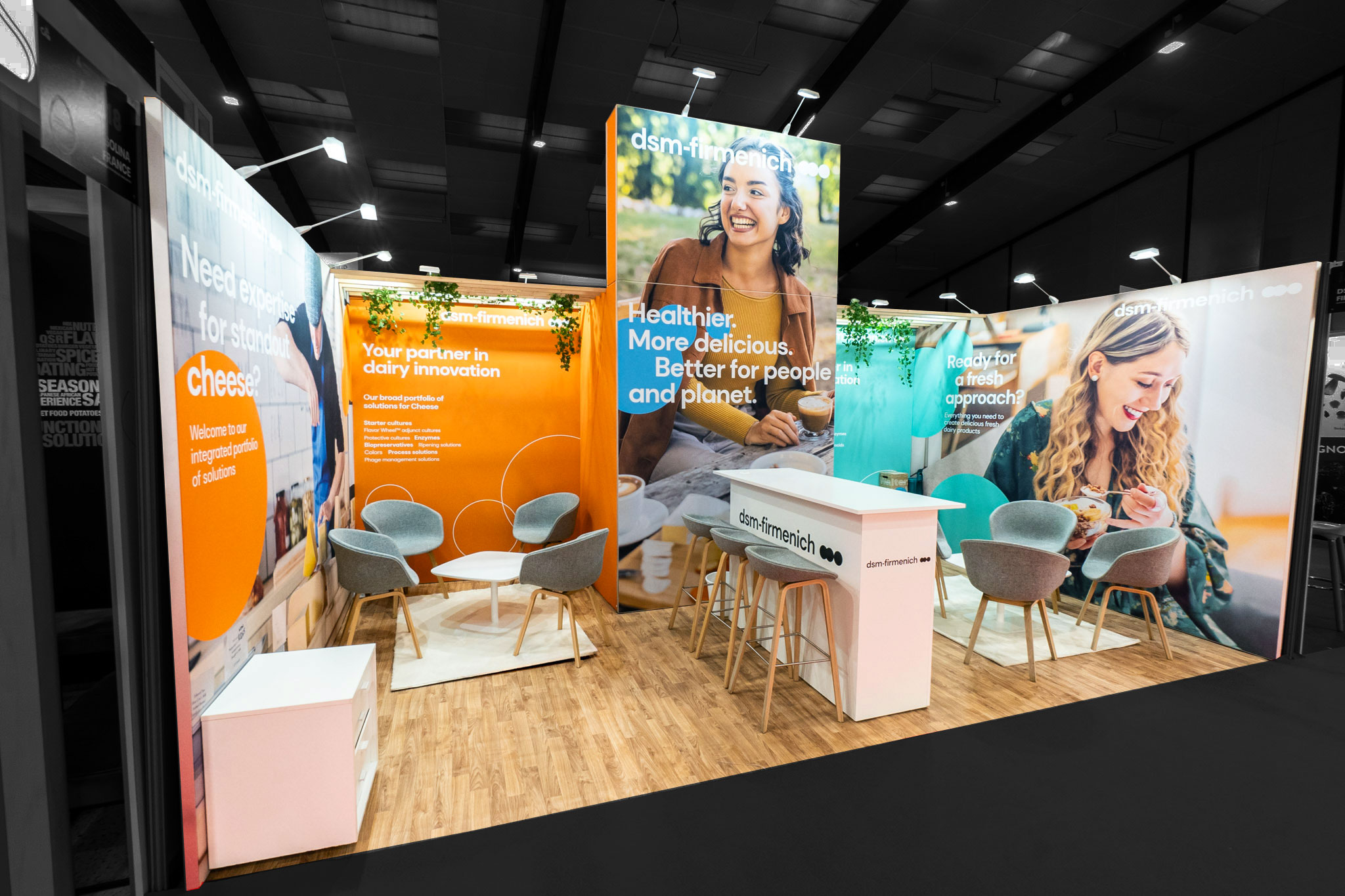
Modules are added, removed, and reorganized. A company can have a 60 m² stand as a reference configuration, scale it down to 36 m² for a compact trade show, or expand it to 100 m² for a flagship event. The visual identity remains consistent. The furniture and reception desks are the same. Only the configuration changes.
In a multi-year multi-salon strategy, messages evolve. A product launch, a new line, a brand repositioning.
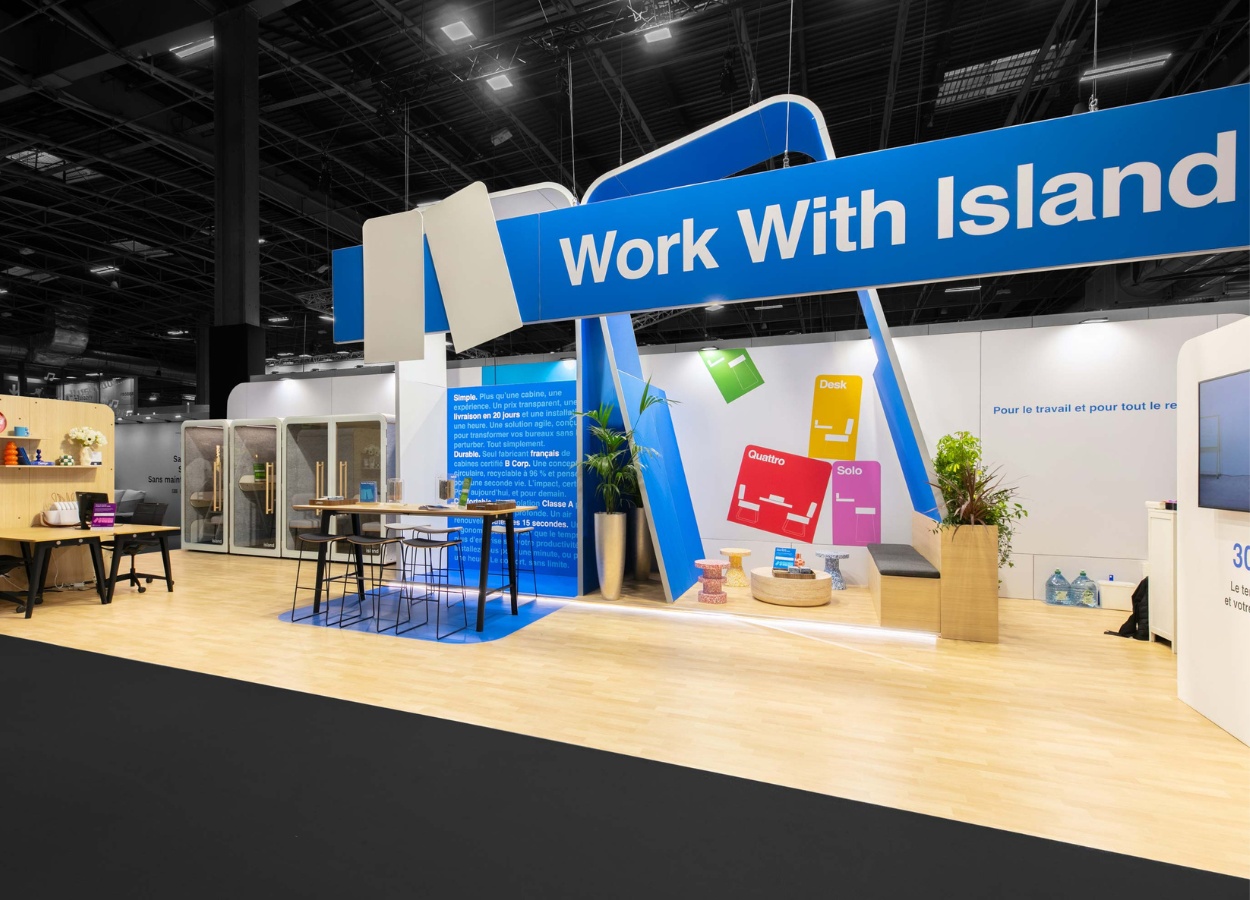
Communication changes, sometimes throughout the year. With a modular stand, the graphic cladding is independent of the structure. Replacing the visuals doesn't mean redoing the stand. Panels, tarpaulins, and light boxes can be replaced without touching the aluminum frames that make up the device's skeleton.
This decoupling of structure and communication is a direct operational advantage and a real lever for budget control.
👉 To see how a modular booth can carry a strong brand identity across different formats: How to design an impactful and personalized modular stand?
The right unit of measure for a modular stand isn't the initial budget, but the cost per exhibition over the lifespan of the unit.
The investment in a modular stand is real. However, a quality stand can be reused for 5 to 8 years, with intermediate graphic updates. Over 4 trade shows per year for 5 years, the investment is spread across 20 participations. On a per-unit basis, the cost per trade show is significantly different from what the entry ticket suggests.
The gains are not limited to the structure. The modular strategy generates savings in several areas:
👉 Ready to calculate the ROI of your booth at multiple trade shows? Contact Steve and his team for an analysis tailored to your schedule.
The first step of a modular multi-show strategy: define a reference configuration. The booth in its full version, designed for the largest space of the season.
This configuration becomes the standard. It integrates the structuring functional areas (reception, demonstration, discussion space, storage), the main signage elements, and high visual impact modules.
From there, all variations are adaptations of this base. Nothing is reinvented each time.
A useful exercise before designing the device: map all the season's participations, noting for each the available surface, the stand configuration (island, linear, corner), and the specific objectives.
This mapping allows for the identification of priority modules, those used systematically, and those that will only be activated occasionally. It is from this analysis that the design becomes truly strategic.
Storing a modular stand isn't a residual cost, it's asset management. Well-organized storage, under appropriate conditions for materials and graphic coverings, determines the speed and quality of redeployment.
Some companies integrate their modular stands into their communication asset inventory, on par with their vehicle fleet or IT equipment. This approach is consistent with the actual lifespan of the device.
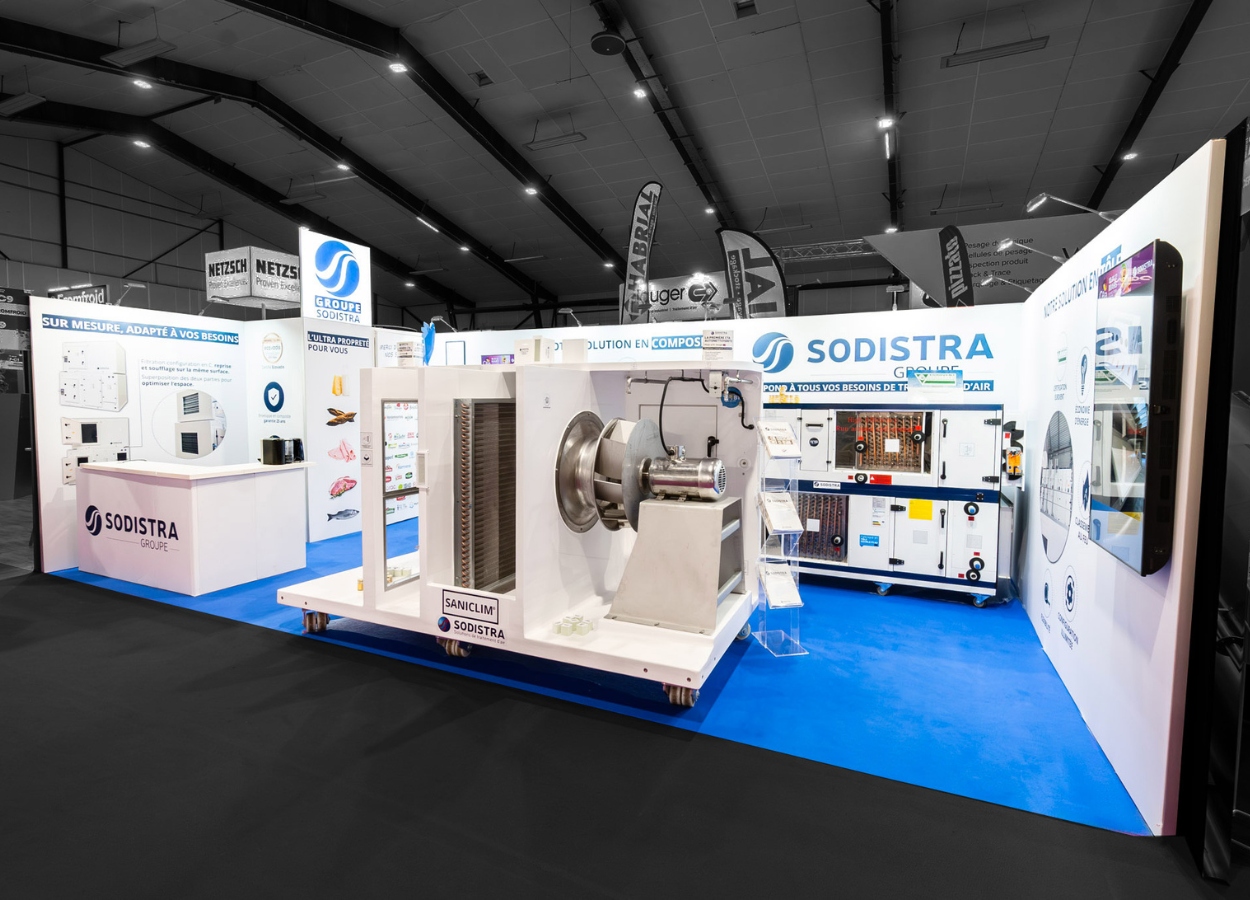
At national trade shows, booth sizes often range from 6 to 50 square meters. A modular booth in this range (our solutions EcoMod or FlexiMod can integrate a reception desk, two to three vertical elements, a demonstration area, and a storage room.
At flagship trade shows, the spaces exceed 80 m², even 150 m² and more. The same modular base extends with complementary modules to create meeting spaces, VIP areas, and immersive demonstration areas. This is the positioning of our range PremiumMod.
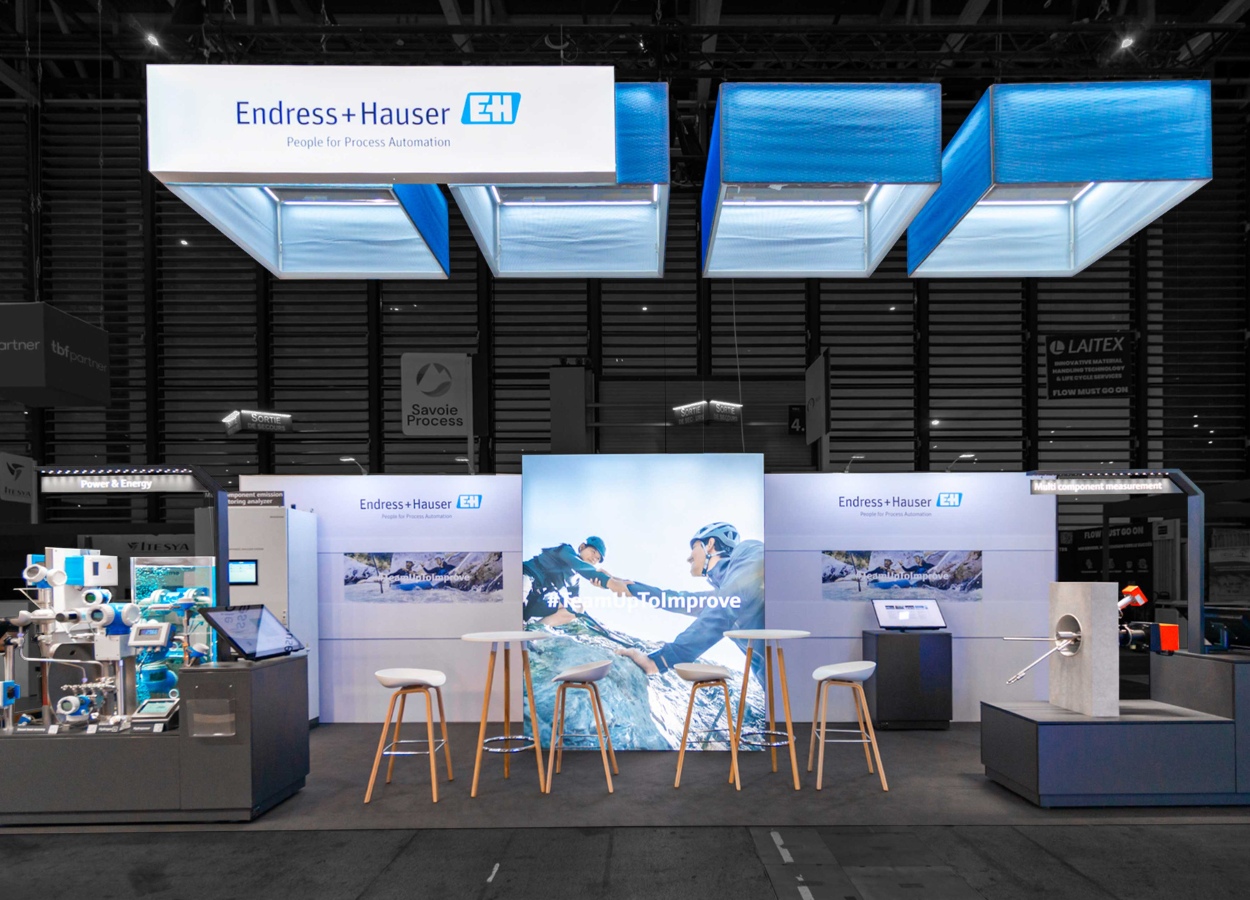
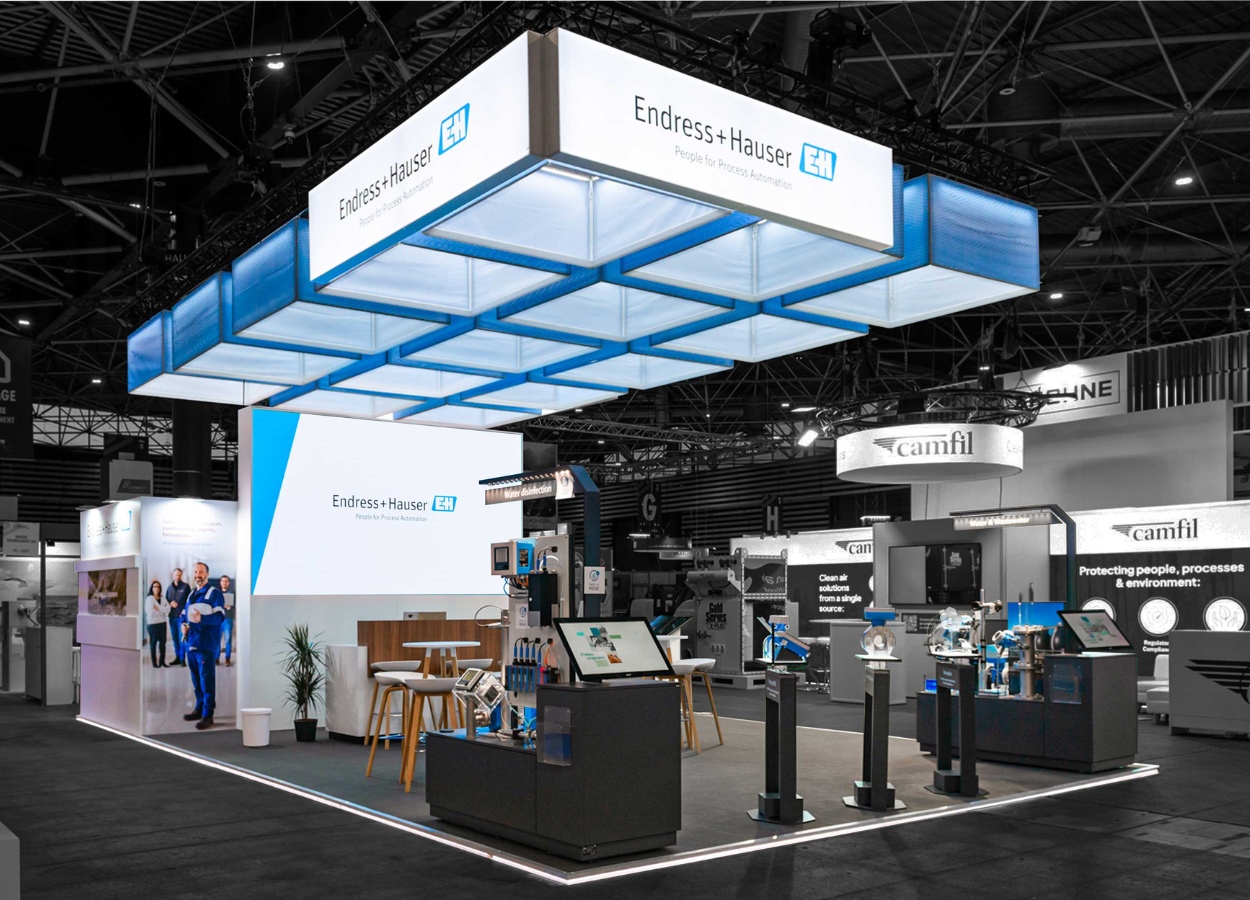
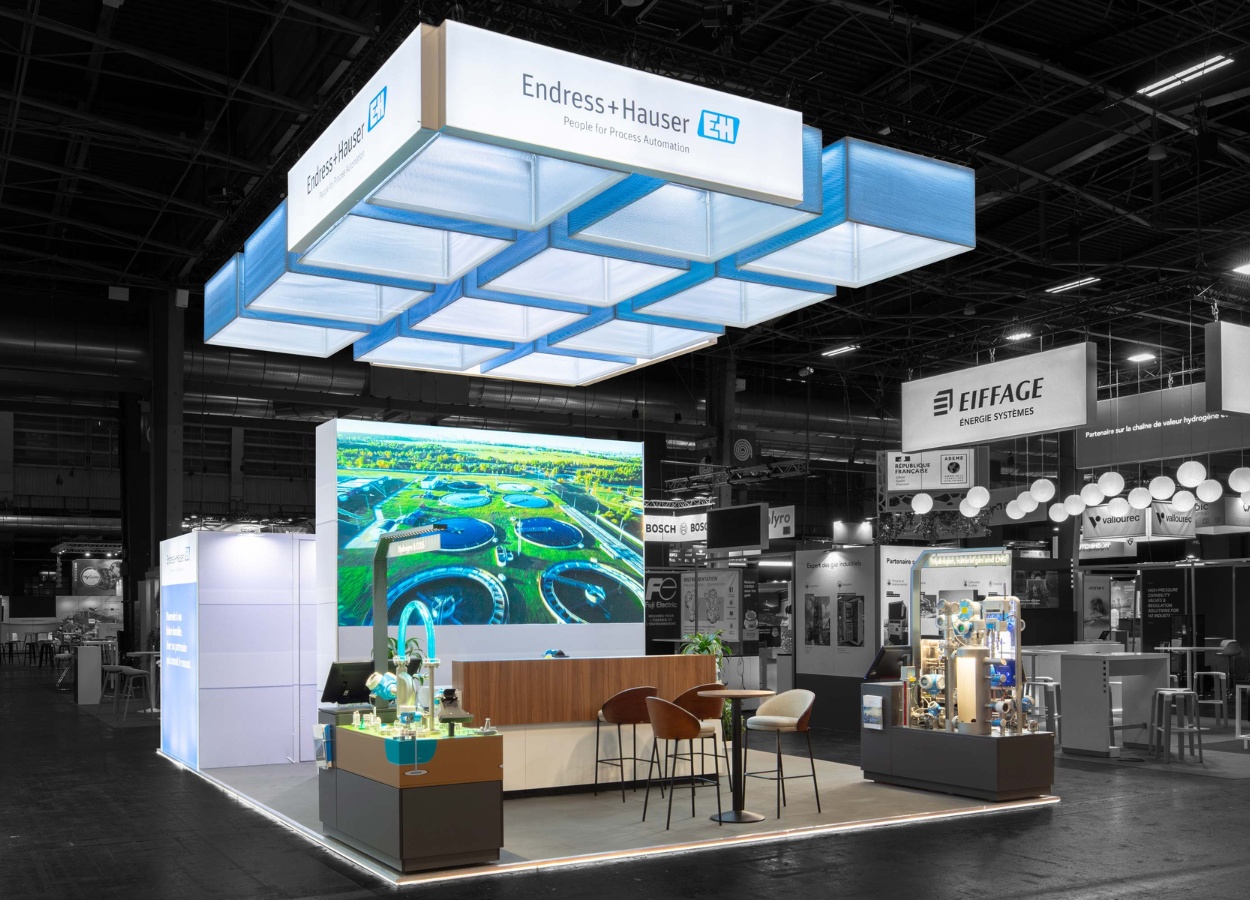
The Endress+Hauser case clearly illustrates this logic:
With a modular 24 m² booth deployed at the Pollutec trade show, adaptable to other formats throughout the year, with a consistent visual identity and a setup that grows in strength with each participation.
What we learn from strategies that work
Companies that make the most of a multi-show modular booth share a few common characteristics.
In this FAQwe answer the most frequently asked questions about modular exhibition stands The advantages, environmental impact, ease of installation and much more.
Yes. That's precisely the logic of the modular stand : the same basic structure reconfigures itself according to the available space, the stand's configuration (island, linear, corner), and the objectives of each participation. The visual identity remains consistent from one trade show to another; only the arrangement of modules changes.
The right indicator is not the initial budget, but the cost per salon over the device's lifespan. A premium modular stand used at 4 trade shows per year for 5 years depreciates over 20 participations. Adding savings on transport, assembly, and partial graphic design, the actual ROI is significantly better than that of a renewed construction for each participation.
The reference configuration must be sized for the maximum surface area of the season., not for the median surface. From this base, all variations to more compact formats are adaptations. The classic mistake is to undersize to reduce initial investment, then find yourself limited at strategic trade shows.
The Modular Stand offers three ranges suited to different needs and budgets:
EcoMod for compact formats and controlled budgets, FlexiMod for scalable configurations with a quick ROI, and PremiumMod for hybrid devices combining modularity and high-end finishes. Each range is designed to be reused for several years.




©Stand Modulaire 2026 - Terms of use