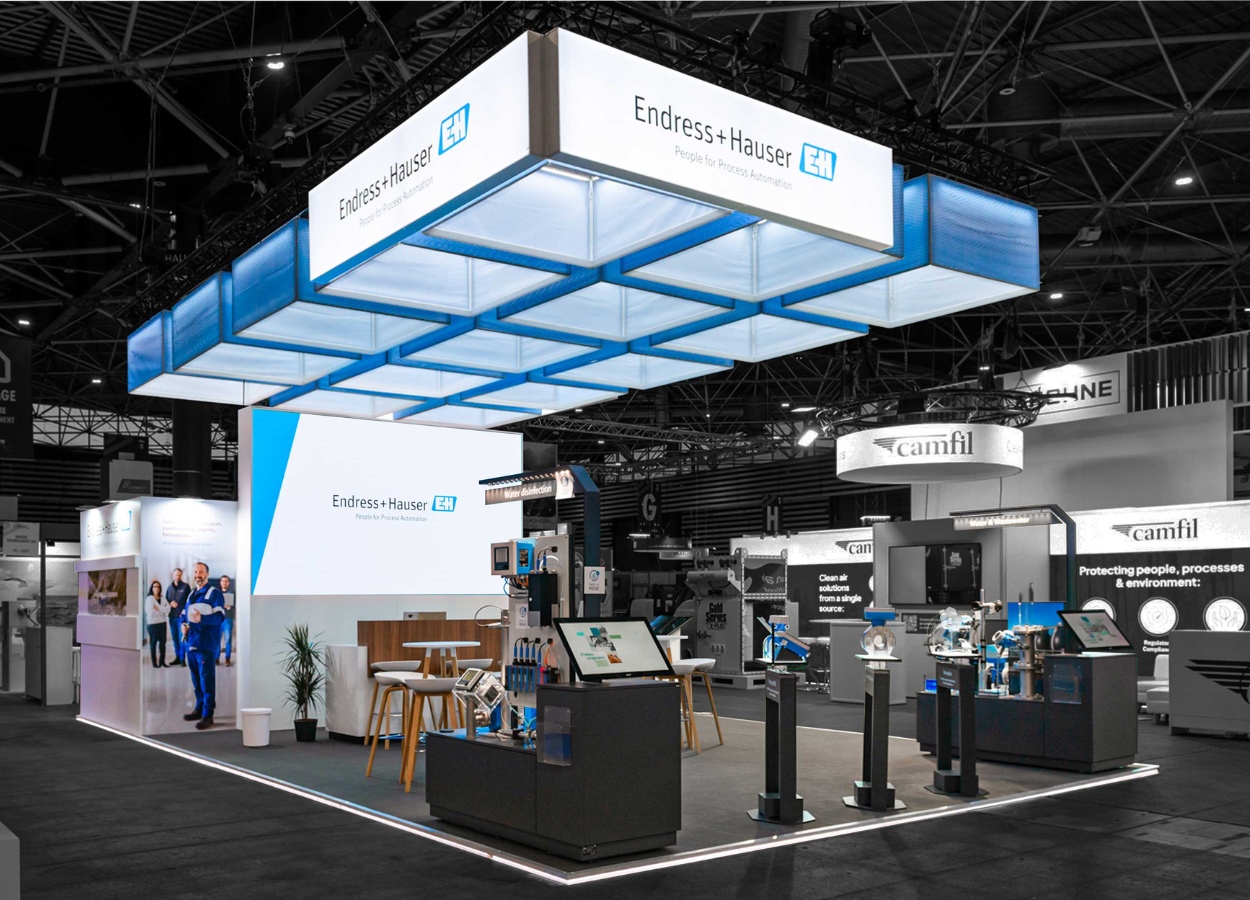
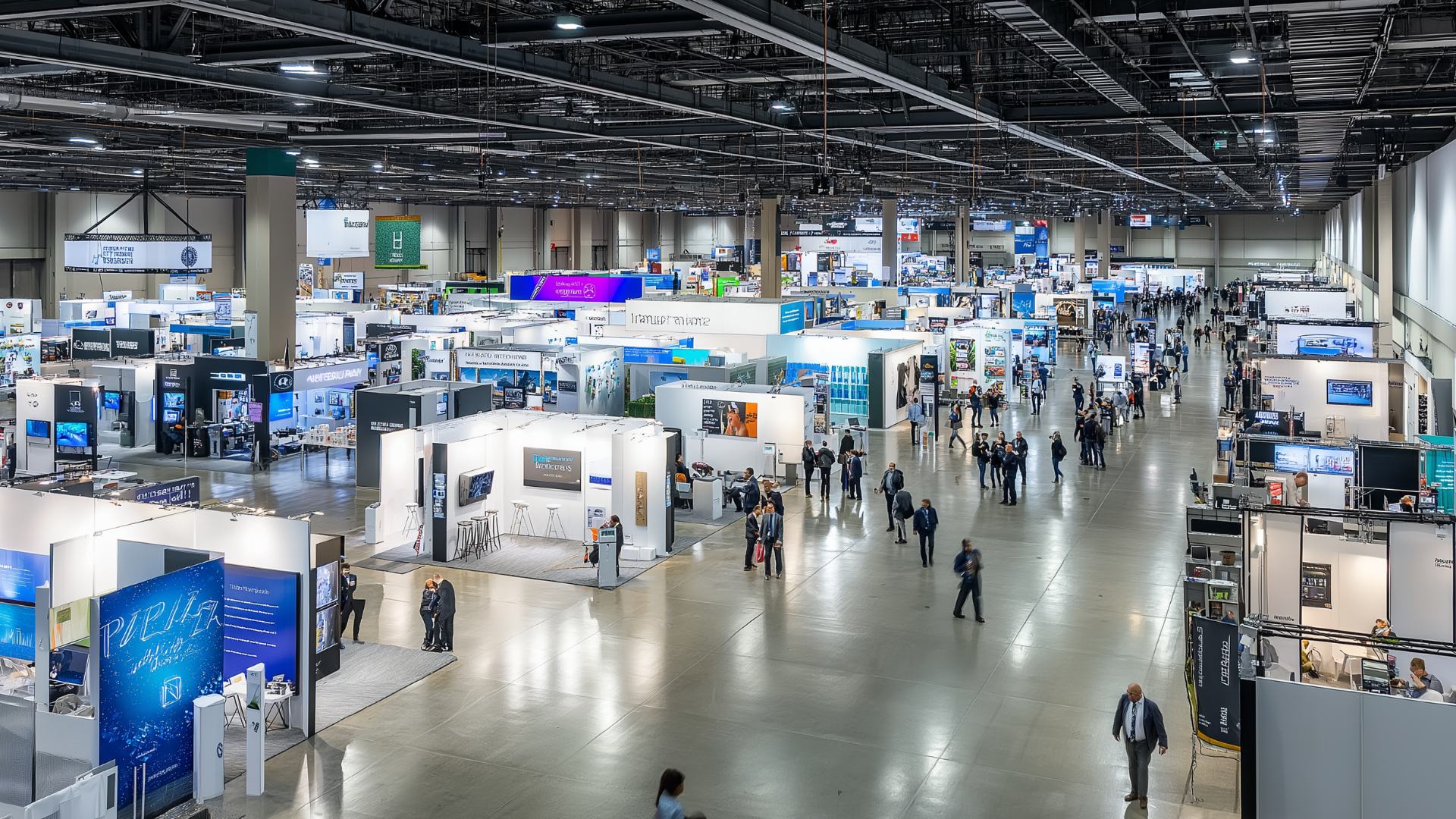
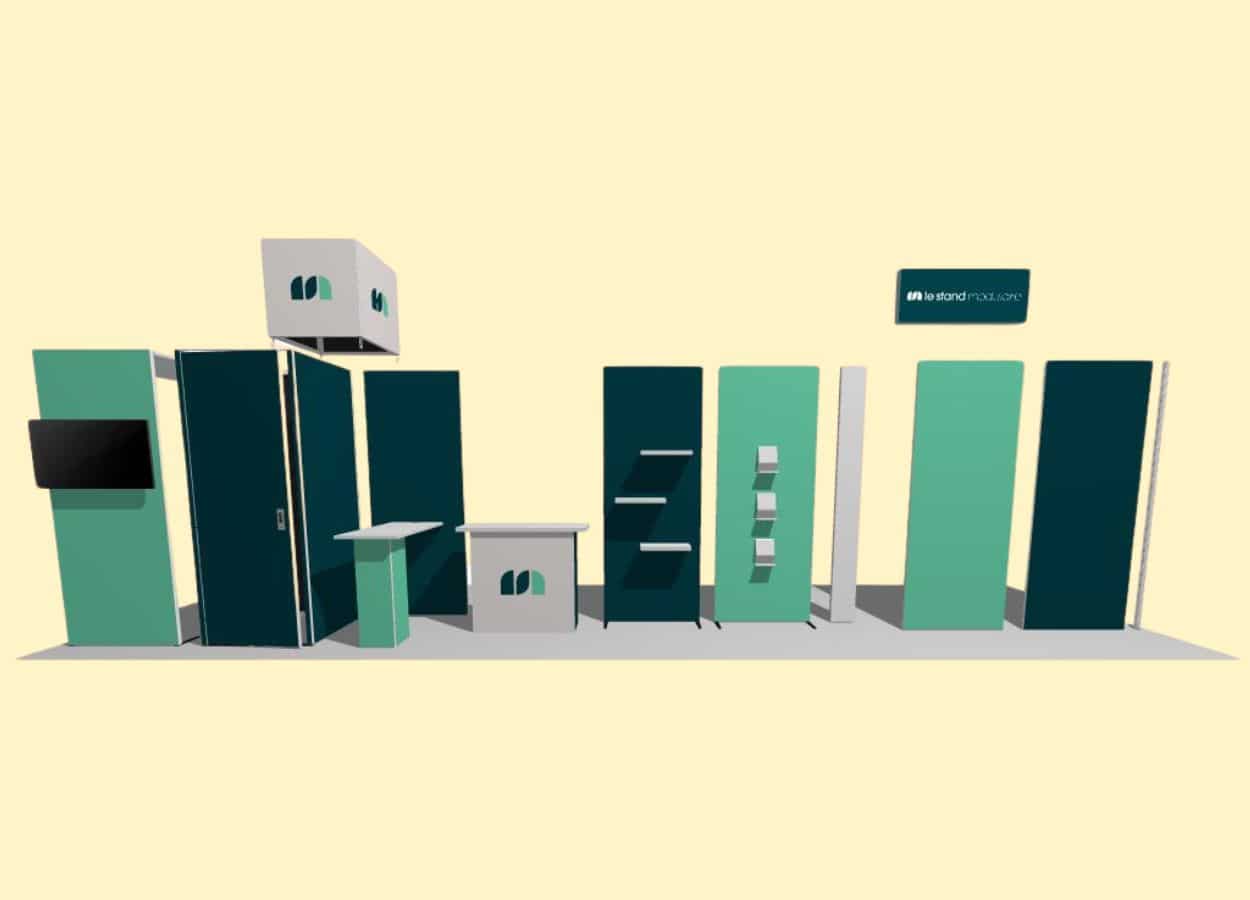
A modular booth reduces the carbon footprint of trade show participation by limiting waste production, optimizing transportation, and favoring sustainable and reusable materials over several years.
Each exhibition generates a quantity of waste that few exhibitors truly measure. According to ADEME, an average event with 5,000 people produces 2.5 tons of waste and consumes 1,000 kWh of energy. Set design materials : Decorations, signage, structures, are the number 1 source of waste in events. The modular stand addresses a significant part of this problem.
The modular stand is, by nature, a structural response to the problem of event waste. A modular structure is designed from conception to be dismantled, stored, and reassembled. Structural elements such as partitions and frames can withstand multiple cycles of use over 5 to 10 years. Graphic coverings are replaceable independently of the structure.
Concretely: an exhibitor participating in four trade shows per year does not order four new structures. They redeploy the same one, reconfigured. The volume of materials consumed per event is radically reduced as a result.
👉 Do you participate in several trade shows throughout the year? Contact our team To design a device intended to last.
Transportation represents one of the most significant carbon emission sources in organizing trade show participation. Box weight, number of turns, distances traveled: every variable counts.
A well-designed modular stand optimizes this balance in two ways:
First, by compactness. The frames the panels interlock, the panels stack. At equivalent surface area, the transport volume of a modular stand is significantly lower than that of a traditional timber construction. Less volume means fewer trucks, fewer pallets, and less fuel.
Next, due to the proximity of resources. For the assembly of the stand, the distance between the storage location and the exhibition venue is a direct lever on the carbon footprint and logistical costs. Our three agencies, Paris, Lyon, and Nantes, and our partner storage workshops are located as close as possible to the major French exhibition sites.. Specifically, this reduces the distances traveled in the final kilometers before each trade show: less transportation, fewer emissions, and lower travel expenses with each setup.
👉 To understand how a modular stand can be reconfigured according to different surfaces and formats: Custom, modular, or hybrid stand: how to choose?
The choice of materials accounts for up to 40% of the total environmental footprint of a trade show participation.
Aluminum is the benchmark structural material in modular construction. It is infinitely recyclable without loss of properties. Its lightness reduces the weight transported. Its durability guarantees several years of use without structural degradation.
Textile coverings like stretched canvases and backlit banners are advantageous replacements for painted wooden panels or printed media on non-recyclable materials. They can be changed without altering the structure and can be produced with low-VOC (volatile organic compound) water-based inks.
LED lighting, integrated into modern modular structures, consumes between 50% and 80% less energy than traditional halogen lighting. Over the course of a multi-day trade show, the difference is reflected in the venue’s energy bill.
Discover Our modular stand solutions and the available ranges according to your formats and objectives.
A modular stand naturally fits into a CSR policy: it reduces waste, optimizes transport, and extends the lifespan of event assets.
CSR requirements are no longer optional in many sectors. According to the EcoVadis Barometer, 69% of buyers now factor environmental performance into their supplier selection process, an increase of 18 percentage points over two years. In B2B, this trend is also evident in supplier relationships: some clients now incorporate environmental criteria into their evaluation of service providers, including how those providers present themselves at trade shows.
A reusable, material-efficient, and logistically optimized stand aligns with a documented CSR approach. It can be featured in sustainability reports. It can be leveraged in brand communications.
👉 A trade show booth project with a CSR dimension? Talk to our team, We are building devices designed to align with your environmental policy.
Choosing a modular stand for your trade shows doesn't mean sacrificing visual impact. It's choosing a durable, reconfigurable structure that consumes less with each deployment, without compromising your brand image.
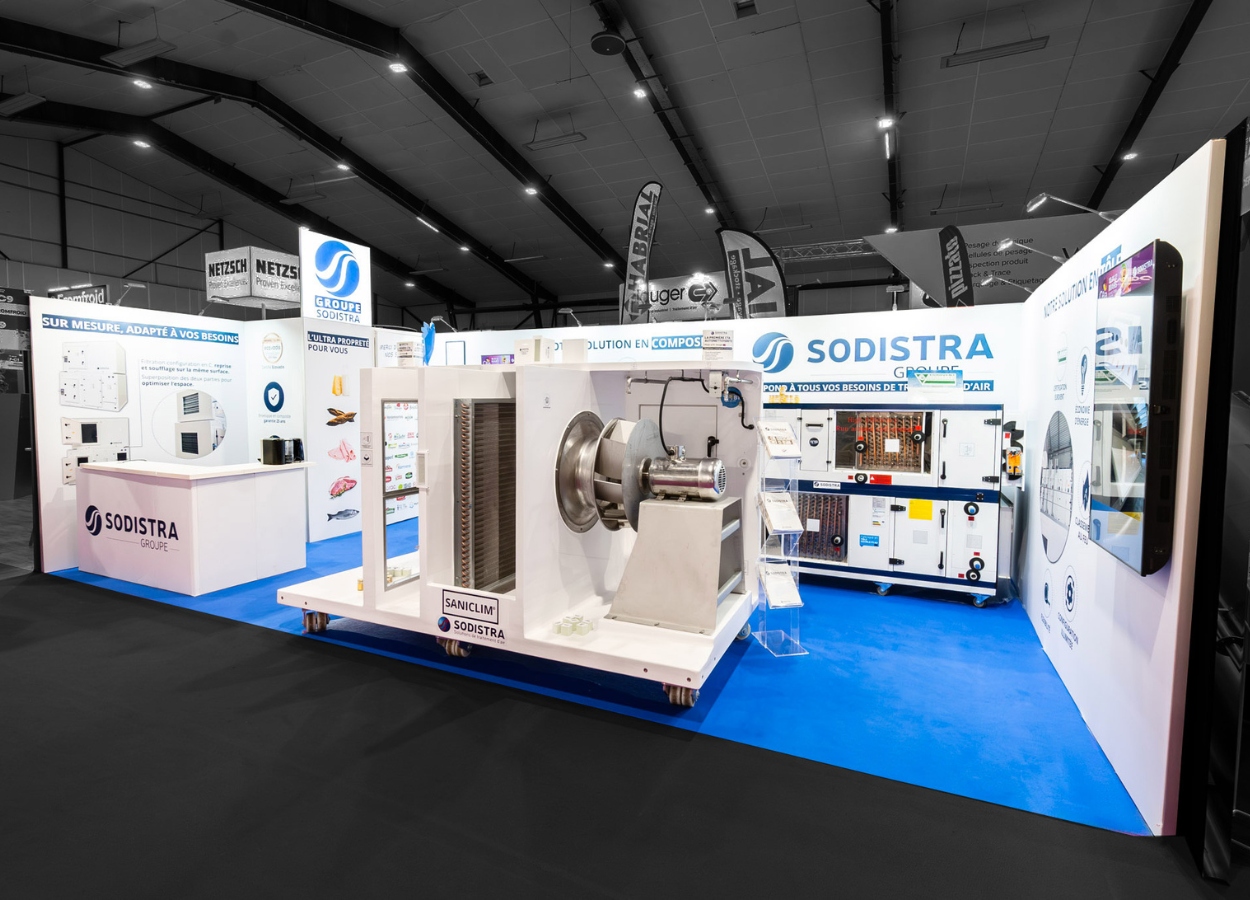
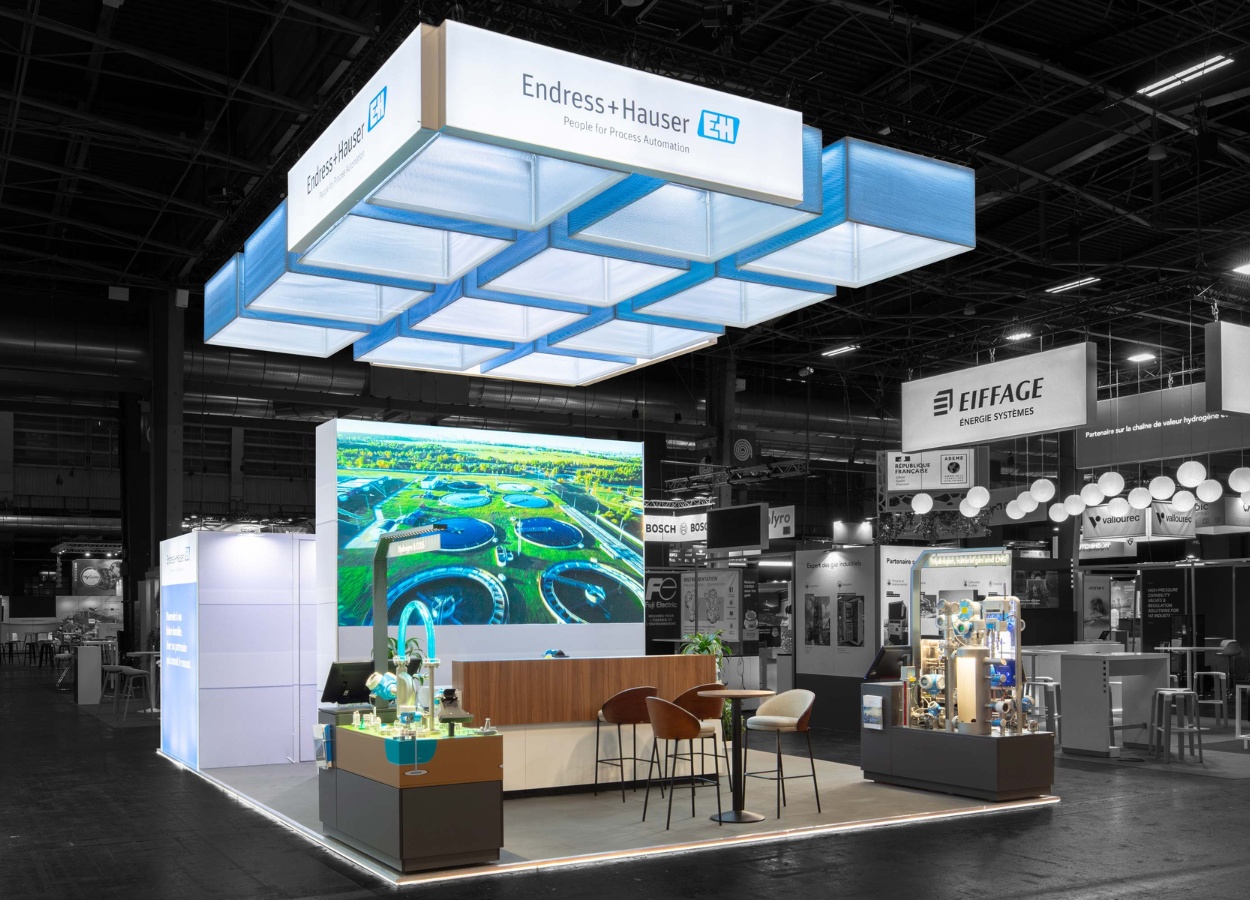
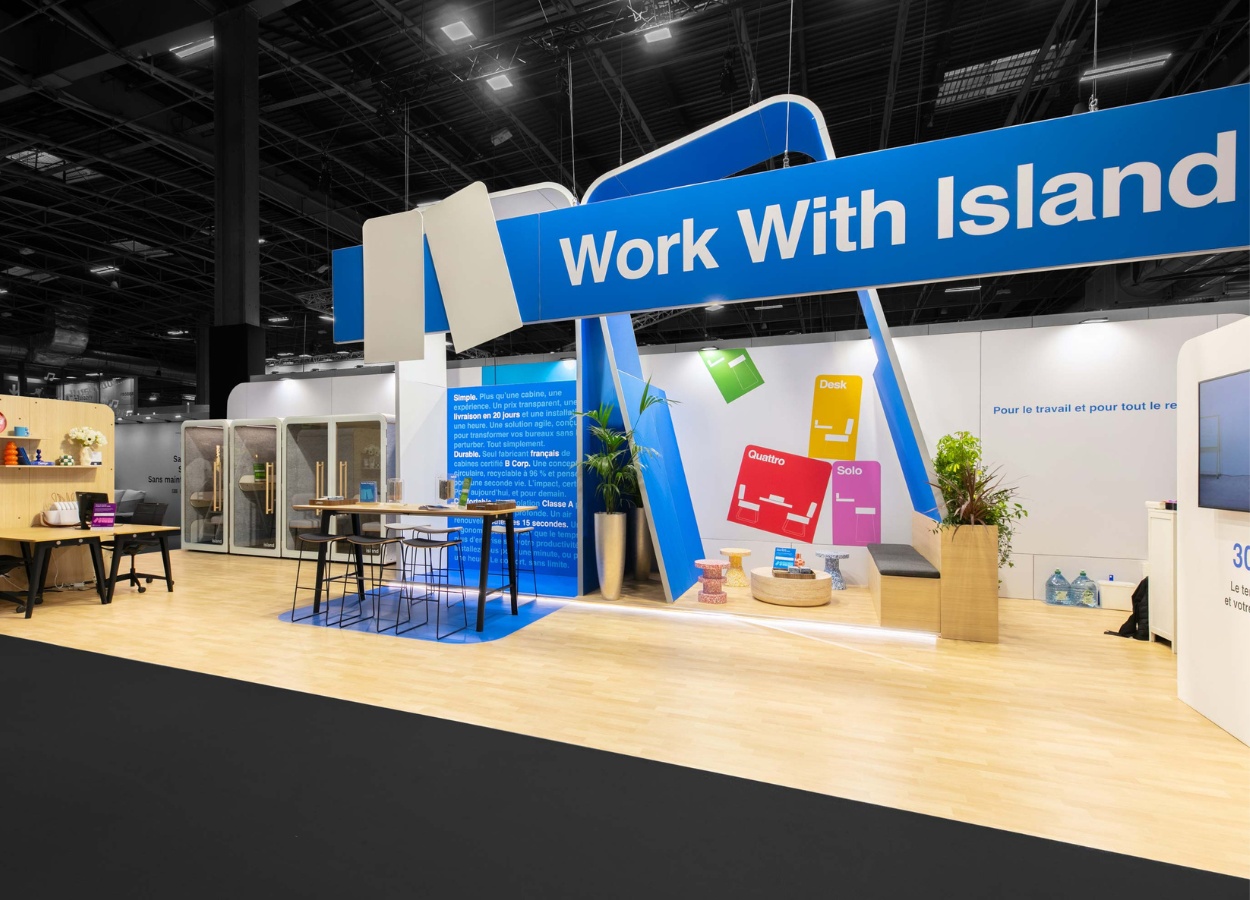
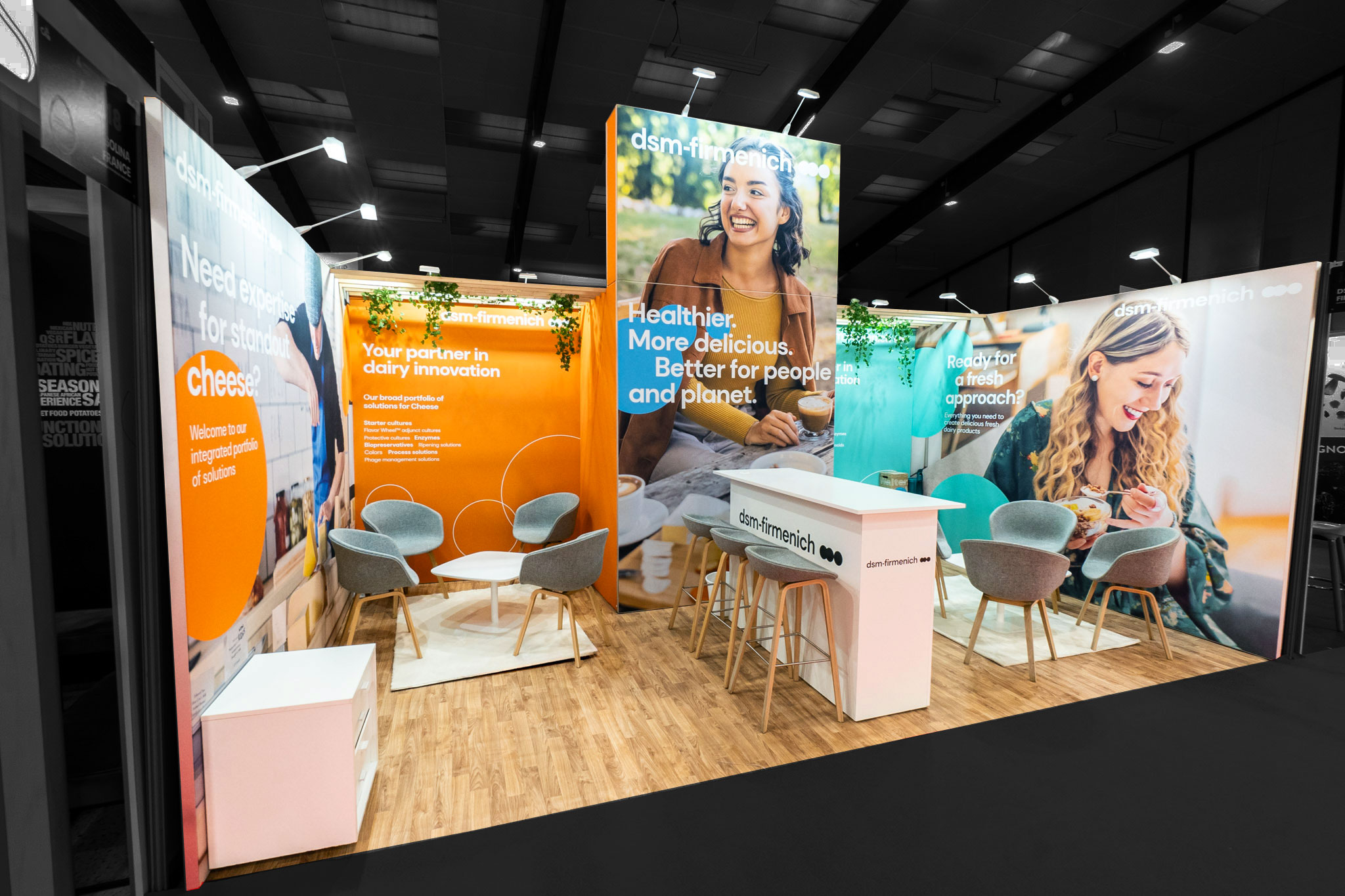
Sustainability and aesthetics go hand in hand. Our achievements recent ones, from 48 m² to 208 m², show it: premium finishes, integrated lighting, high-definition textile coverings. The result in the living room is that of a well-maintained, coherent, identifiable stand.
It is precisely this combination of strong visual impact, reduced footprint, and reusability over several years that makes modular design a strategic choice in its own right.
👉 To go further on ROI and budget optimization across multiple trade shows: How can you optimize your event budget with modular stands?
Reducing the carbon footprint of your trade show booths while maintaining a high-quality presence are not contradictory goals. Modular booths reconcile them: reusable structure, sustainable materials, optimized logistics.
In this FAQwe answer the most frequently asked questions about modular exhibition stands The advantages, environmental impact, ease of installation and much more.
Yes. The reusability of the structure over several years structurally reduces waste production. Over several years and severalpartexpectations, the structure is reused rather than rebuilt. The aluminum used is infinitely recyclable. The graphic finishes can be replaced independently of the structure.
A quality modular stand is designed to last 5 to 10 years, with intermediate graphic updates. The aluminum structure remains functional well beyond that, provided it is properly stored between events. It is this longevity that makes modular an asset rather than an expense.
Four main levers: choose a reusable structure rather than a single-use one, optimize transport by reducing volume and distances, use local materialsrabbles (aluminum, textiles, LED), and group the shares with a single reconfigurable device. The modular stand responds to these four levers simultaneously.
Yes. A modular stand that can be reused over several years reduces waste, limits transportation emissions, and extends the lifespan of event assets. These elements are documented and can be incorporated into a carbon footprint or CSR report. This is a concrete argument, not just a stance.



©Stand Modulaire 2026 - Terms of use