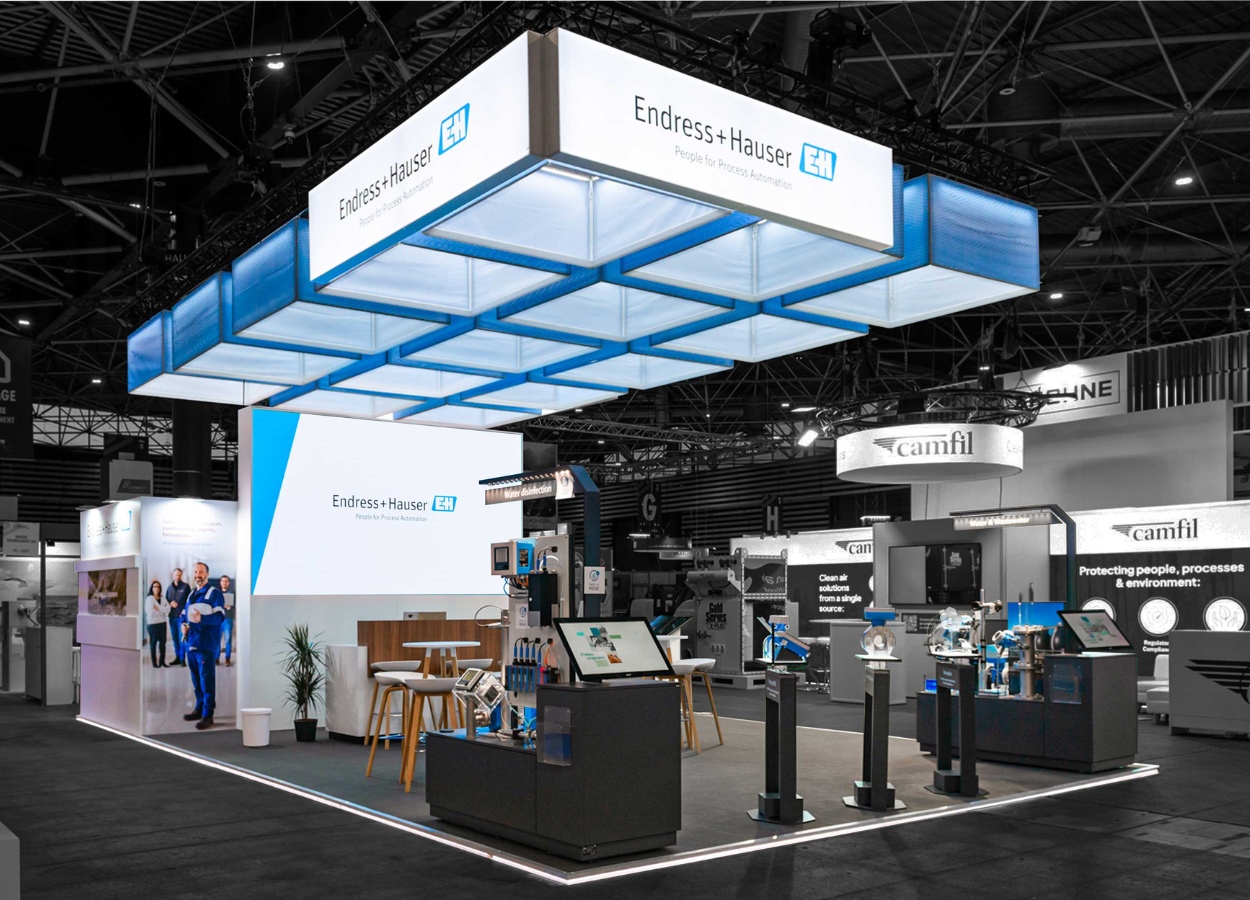
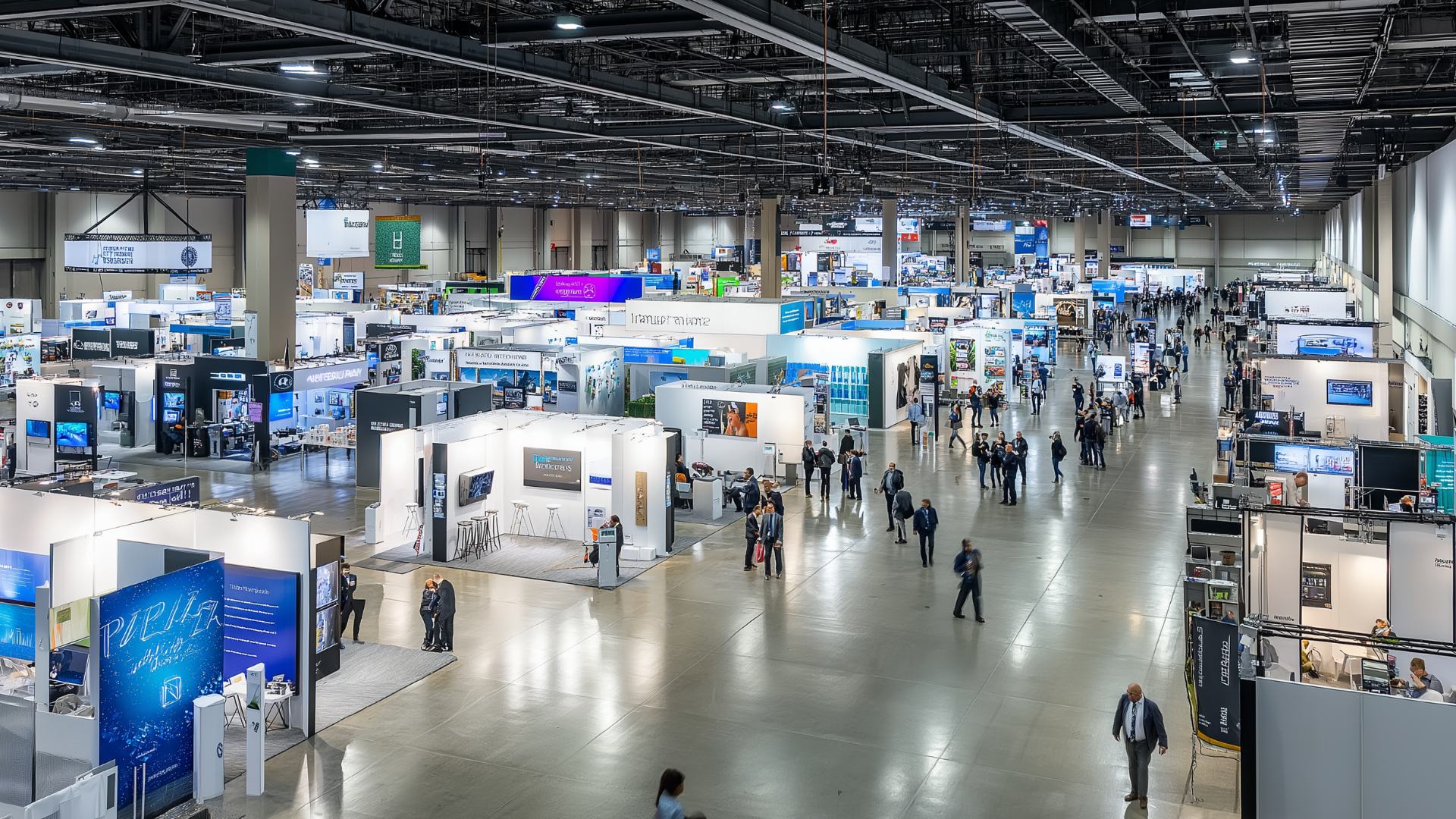
Clients often ask us the same question a few weeks before a trade show: should we rent the booth for this edition, or invest directly in a structure of our own? The answer comes down to one figure: how many times will this booth be used in the next twelve months. That is the figure that shapes the entire decision. Here is how to calculate it, and how to make the call.
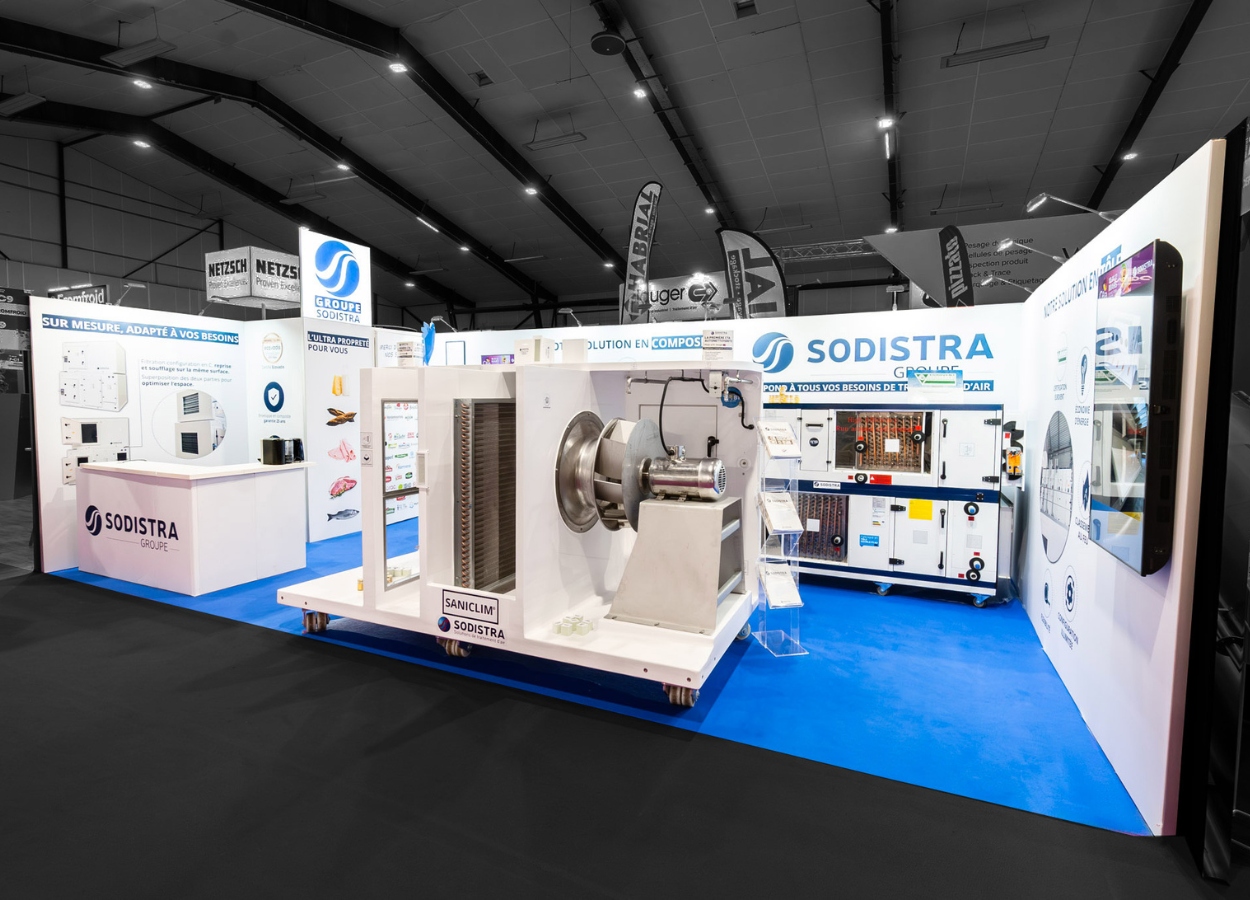
Rental is suited to a specific situation: an isolated trade show, entry into a new market, or a test before a long-term commitment. It allows space to be occupied with a professional structure for the duration of an event, without tying up a budget in an asset whose reuse remains uncertain.
Three cases make renting relevant:
A once-a-year trade show, without visibility into recurrence
A market exploration test a sector, a geographical area, before investing
A one-time cash flow constraint, for the duration of a budget exercise
In these configurations, leasing removes an unknown: hardware storage, maintenance, and replacement remain the provider's responsibility. The company focuses on the content of its presence, not the logistics of its infrastructure.
Here, the logic shifts. A purchased modular stand acts as a reusable asset. Its value becomes apparent starting from the second or third event.
The mechanics are simple. The purchase cost is distributed across each participation. The more trade shows there are, the lower the unit cost per event becomes. Meanwhile, the rental cost remains fixed for each edition.
Take a company that attends four trade shows a year. For rental, it pays four times the rate of a single show. For purchase, it depreciates a single structure across four events, with a renewal of the graphics and partitions, without starting from scratch every time. The economic tipping point generally occurs between the third and fourth participation.
The purchase also establishes lasting customization: a distinct visual identity, modules designed for your brand, and a structure that reflects you from one trade show to the next. Today, modular design achieves a level of finish close to custom-made, while retaining its reusability. The two approaches complement rather than oppose each other, as our article shows custom, modular or hybrid trade show booth.
Are you hesitating between the two options for your next trade show? Chat with our teams : We are encrypting both scenarios before you make your decision.
Beyond the use cases, one question truly shapes the decision: how many times will you exhibit during the year?
This frequency-based reading reflects a broader market reality: modular construction is establishing itself as a strategic tool in its own right for companies structuring their event presence throughout the year — particularly those building a multi-salon strategy over several events a year.
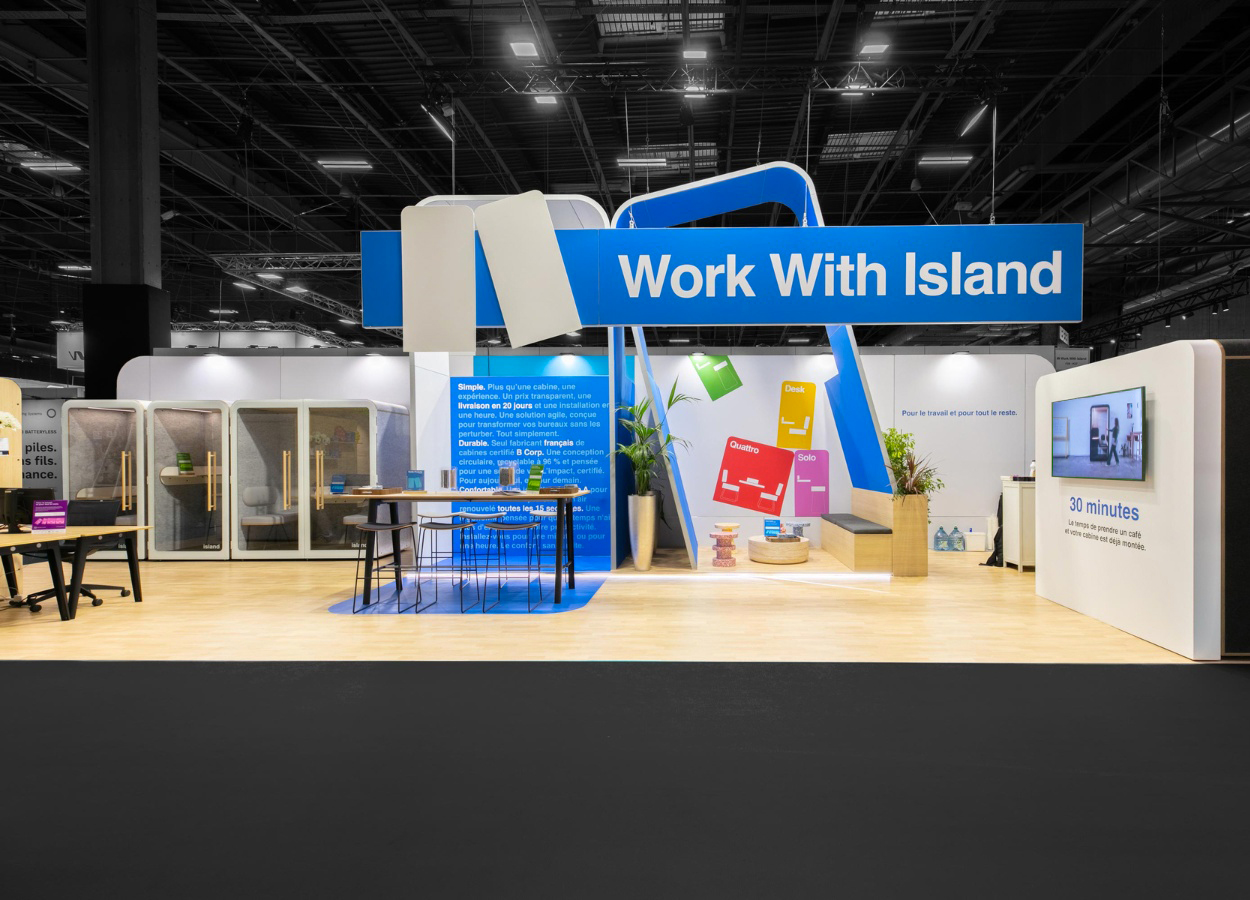
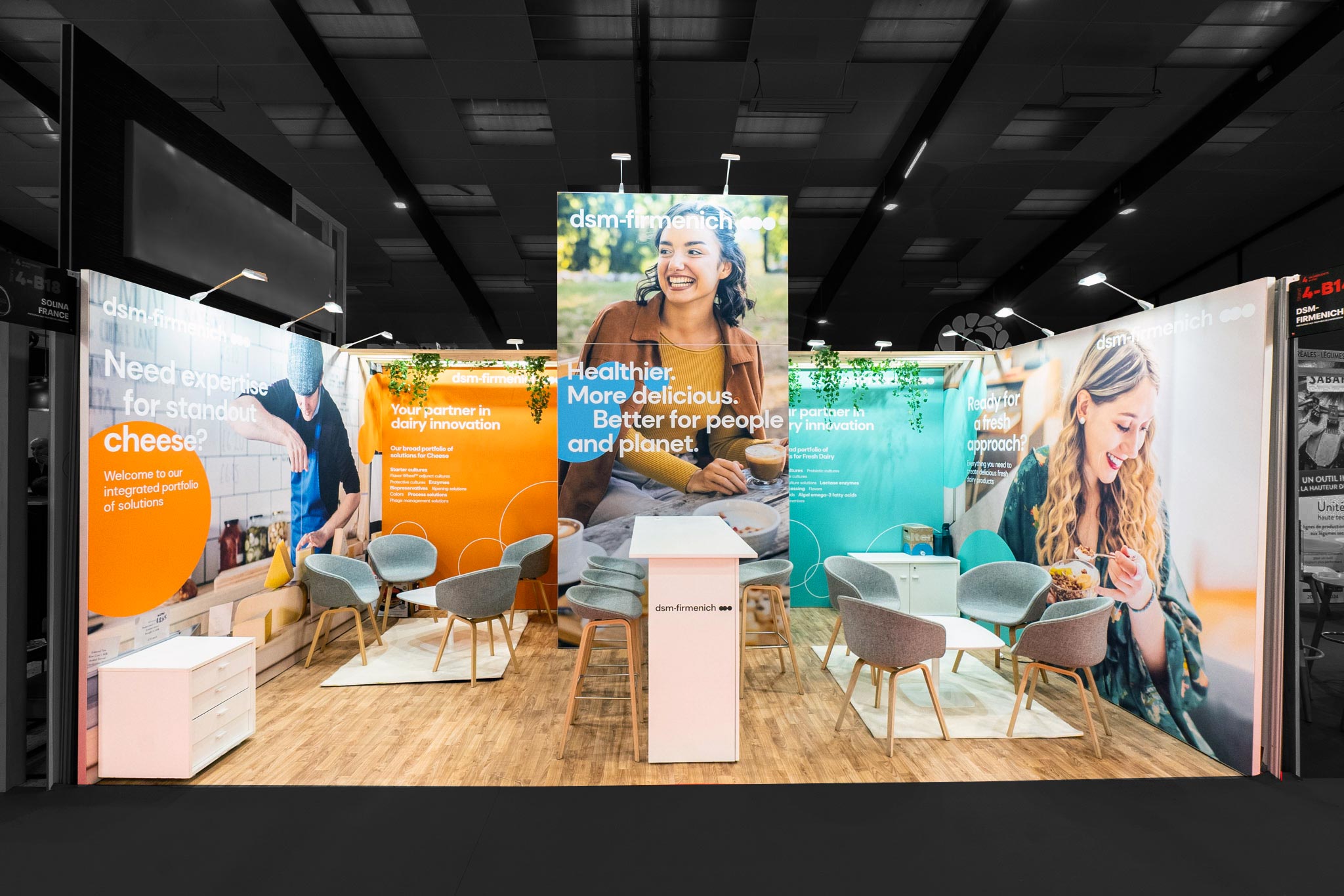
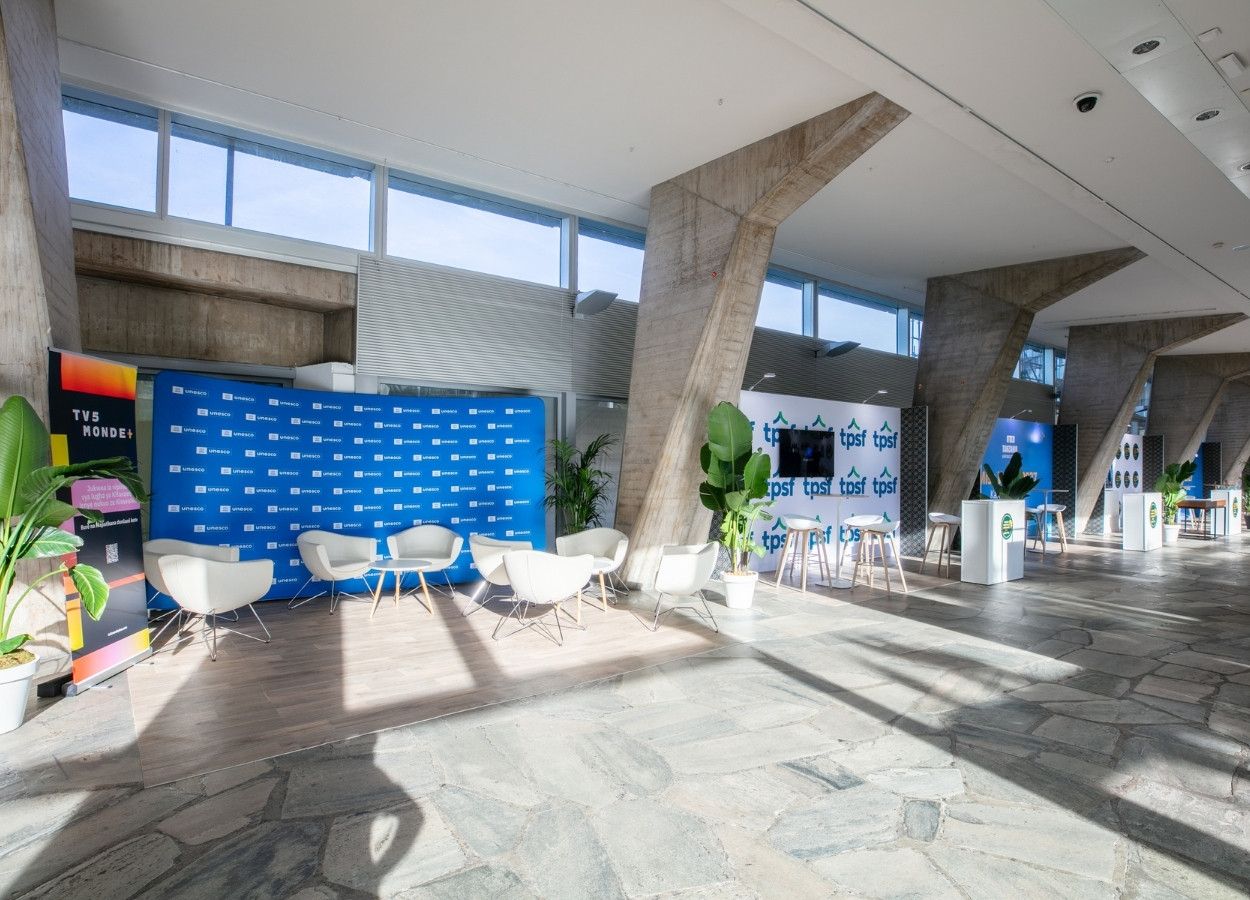
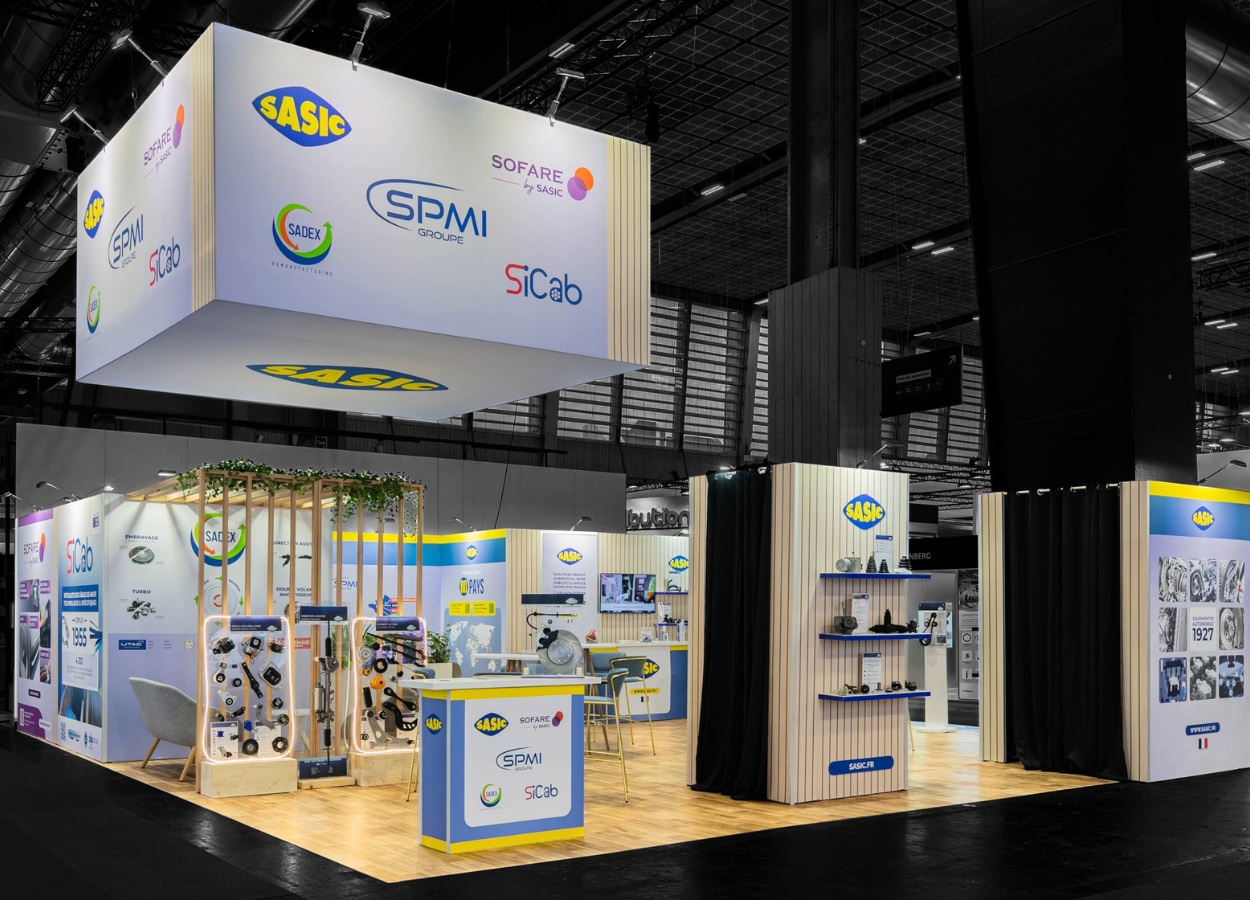
Renting or buying is not always a definitive choice. Some companies combine both: a purchased core structure that serves as a reusable foundation from one trade show to the next, supplemented occasionally by rented modules for larger or more exceptional events.
This approach avoids over-investing in a format that will only be used once, while maintaining the brand consistency of a structure you own. It is particularly well-suited for companies whose exhibition spaces vary greatly from one trade show to another.
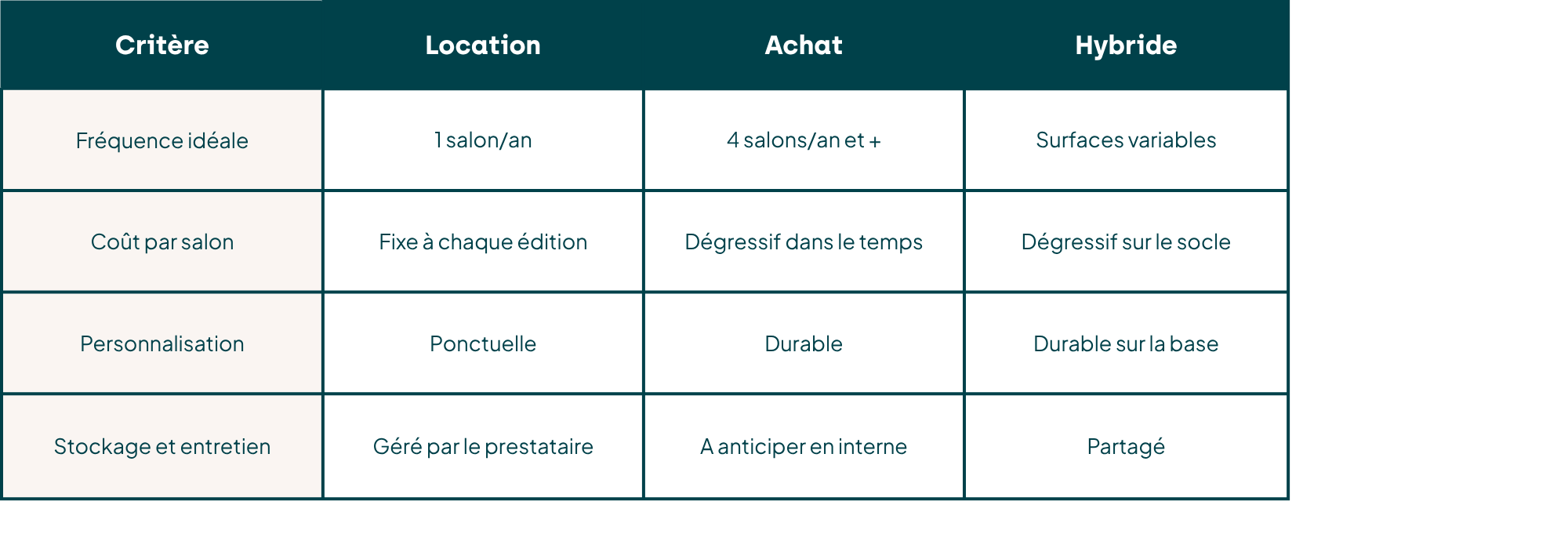
Before any decision, run your project through these three criteria:
Fewer than 2 trade shows planned? Rental remains the simplest solution. Starting from 3 trade shows per year, purchasing becomes significantly more profitable.
Similar formats from one trade show to another? Buying is a must, the structure is useful every time. Surfaces and layouts that change often? Rental, or hybrid, offers more flexibility.
Need a depreciable investment, aligned with an asset strategy? Buying.
Need to manage a variable workload, event by event? Leasing.
Renting or buying comes down to a single reality: your exhibition schedule. A one-off participation calls for renting. A trade show strategy built over the course of the year calls for buying—with a modular system designed to last, not just as a quick fix.
Are you preparing your trade show calendar for 2027? Let's talk about it together We help you calculate the scenario adapted to your participation frequency.
In this FAQwe answer the most frequently asked questions about modular exhibition stands The advantages, environmental impact, ease of installation and much more.
In general, from the third annual participation onwards, the purchase exceeds the cumulative cost of rental. This threshold changes based on two factors: the size of the stand (the larger it is, the faster the purchase pays for itself) and the level of customization desired (a highly customized stand for rent costs proportionally more than a standard stand).
Specifically, a company that exhibits in a 30 sqm space four times a year recoups its investment as early as the first year; for a 90 sqm space, the math tilts even faster in favor of buying, since the rental/purchase gap widens with the surface area.
Yes, and it is even a common practice among companies whose trade shows vary in size.
The concept: a purchased basic structure (the framework, the recurring elements) serves as a reusable base, while additional modules are rented as needed for larger trade shows. This hybrid approach avoids buying an oversized booth for a use that only recurs once a year, while maintaining a stable brand identity from one event to the next.
The rental of a professional modular stand generally includes the structure itself (framework, partitions, flooring), on-site assembly and disassembly, as well as round-trip transport to the exhibition..
The graphic design (visuals, signage, lighting) and furniture can be included or offered as an option depending on the chosen package. This end-to-end management is what distinguishes a professional rental from a simple equipment supply: the exhibitor receives a turnkey booth on the day of the event, without having to manage the assembly logistics.
A well-maintained modular stand can be reused for many years, with regular renewal of the graphic elements (banners, visuals, printed partitions) rather than the structure itself.
It is this distinction that gives the purchase its long-term value: the framework remains stable, and only the visible elements evolve with the rhythm of your campaigns and brand identity.



©Stand Modulaire 2026 - Terms of use