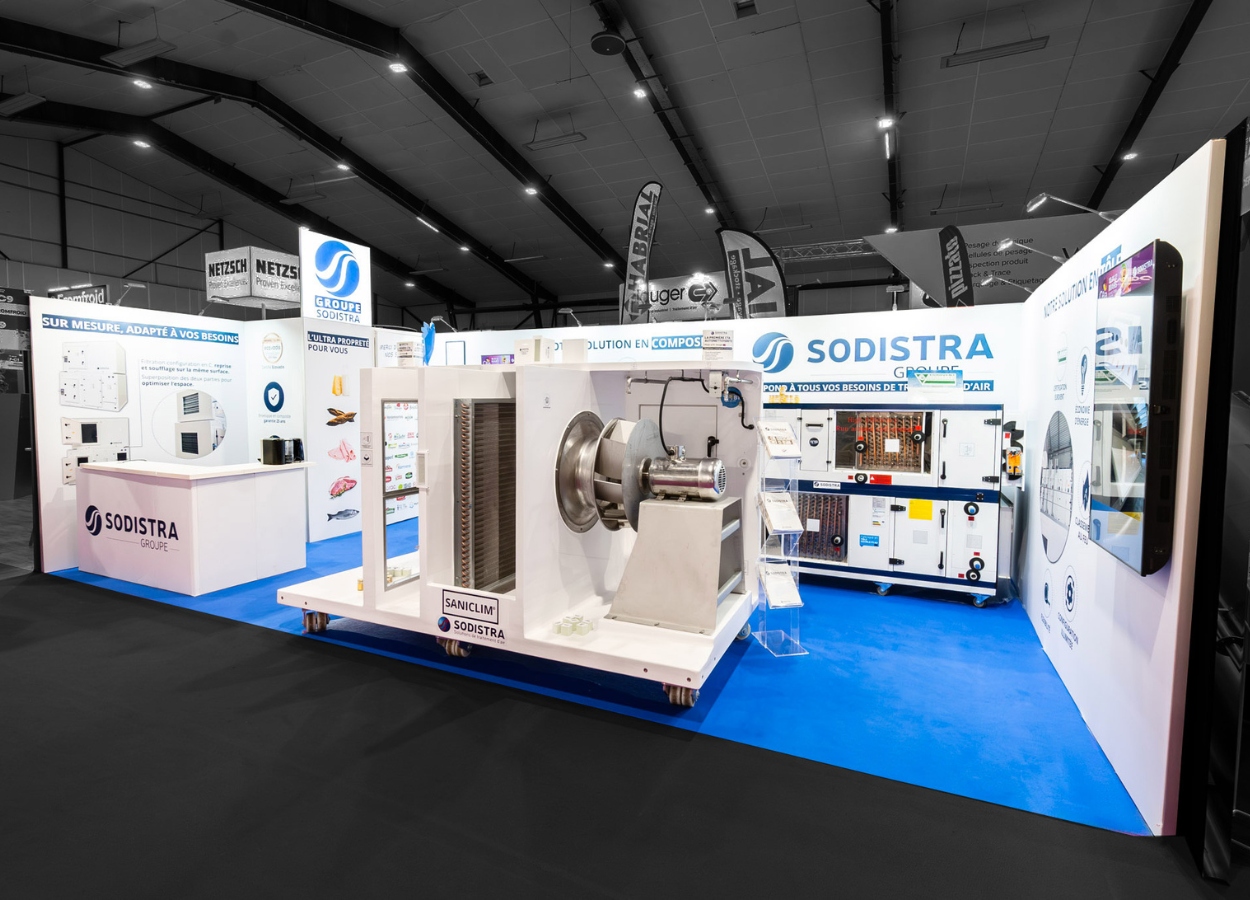
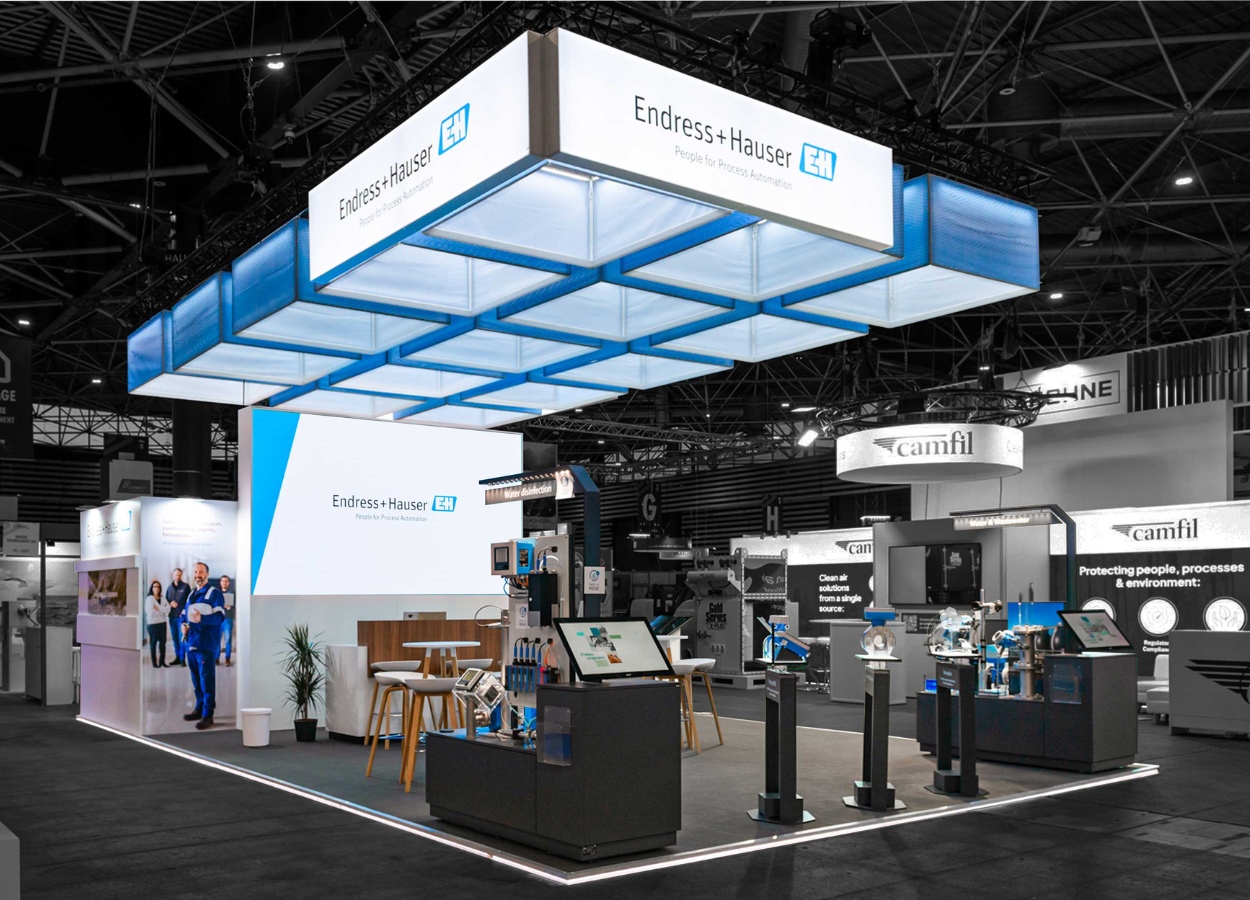
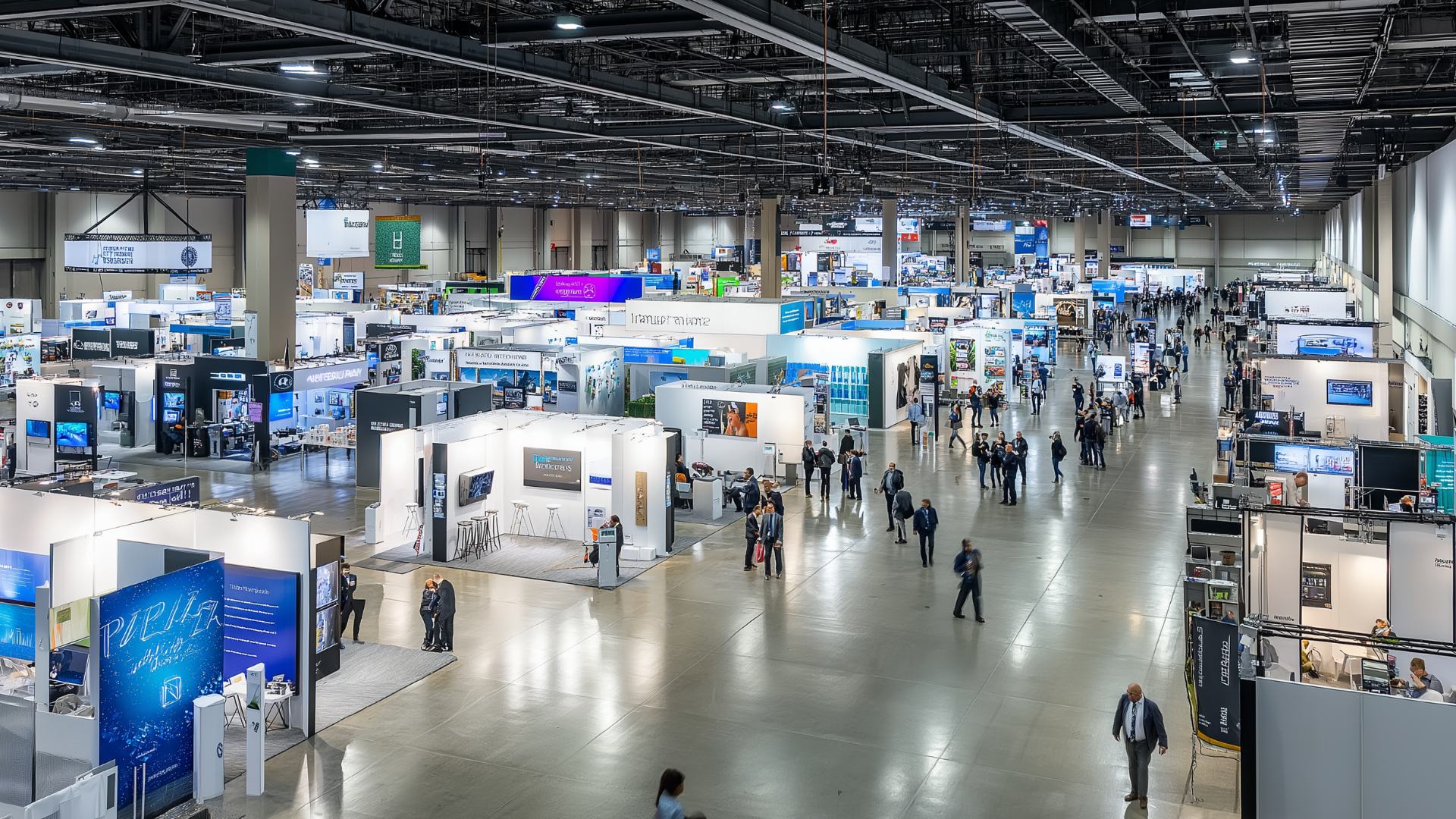
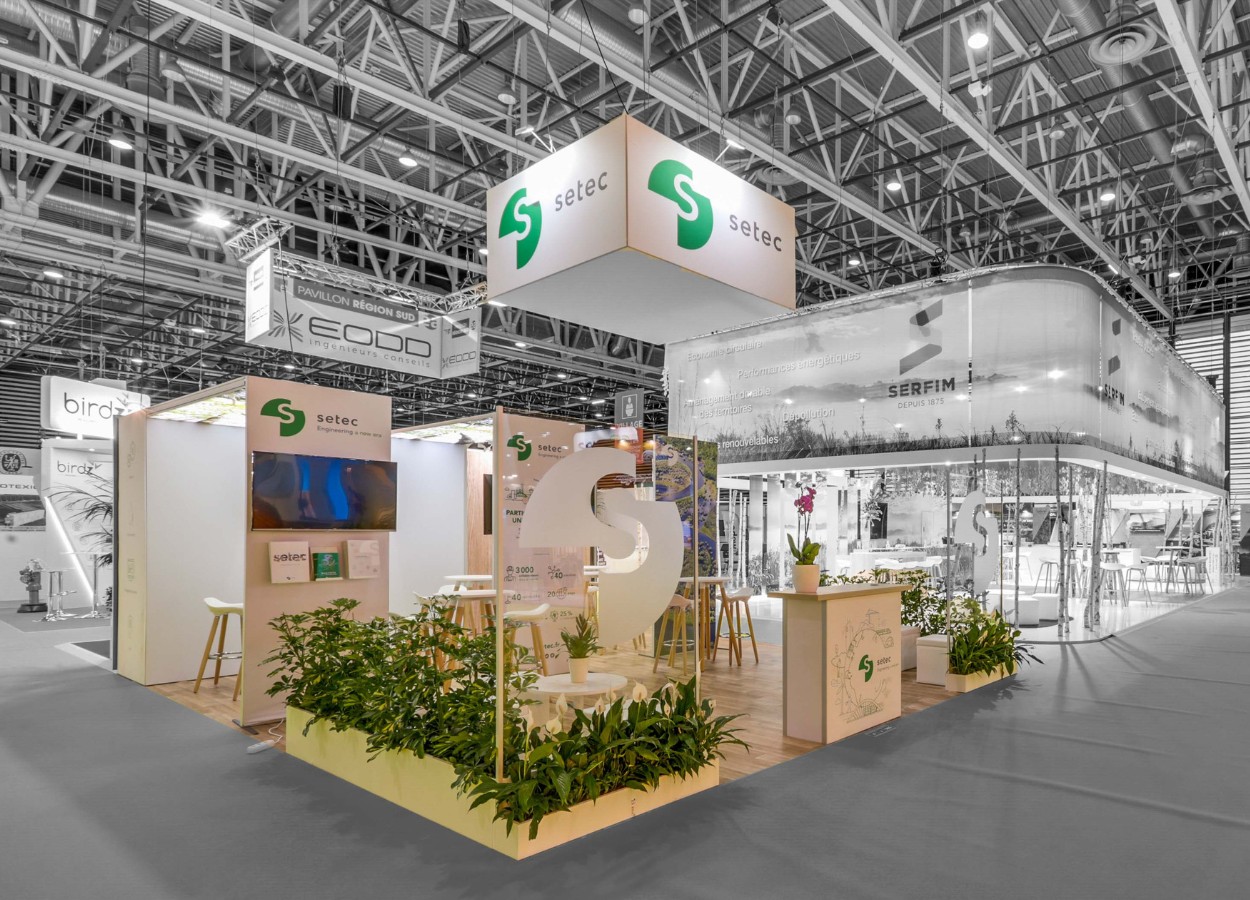
A modular stand is an exhibition structure made up of reusable and reconfigurable elements that allow the same setup to be adapted to different spaces and professional events. Contrary to popular belief, modularity does not mean standardization.
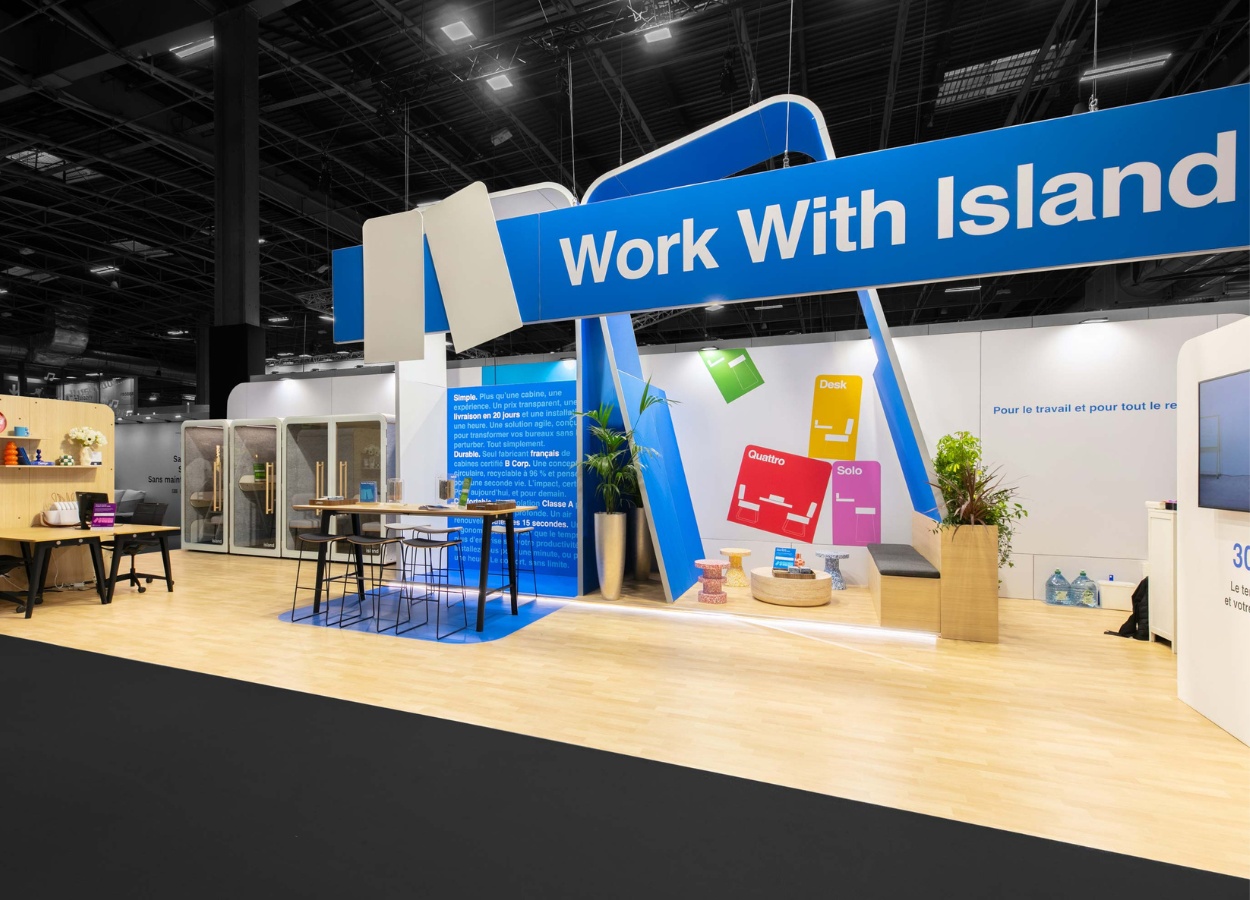
An impactful modular stand is one that combines readable architecture, strong identity, Visitor experience and Strategic coherence.
Its personalization doesn't rely solely on visuals, but on the overall design of the space.
An impactful stand doesn't start with design. It starts with strategy.
Before any design, it is essential to clarify:
A stand designed for a product launch will not be structured like a stand intended to build institutional brand awareness.
Modularity then makes it possible to adapt the structure to these objectives without having to start from scratch for every event.
👉 To inspire you, you can check out all our achievements
The visual impact is built around:
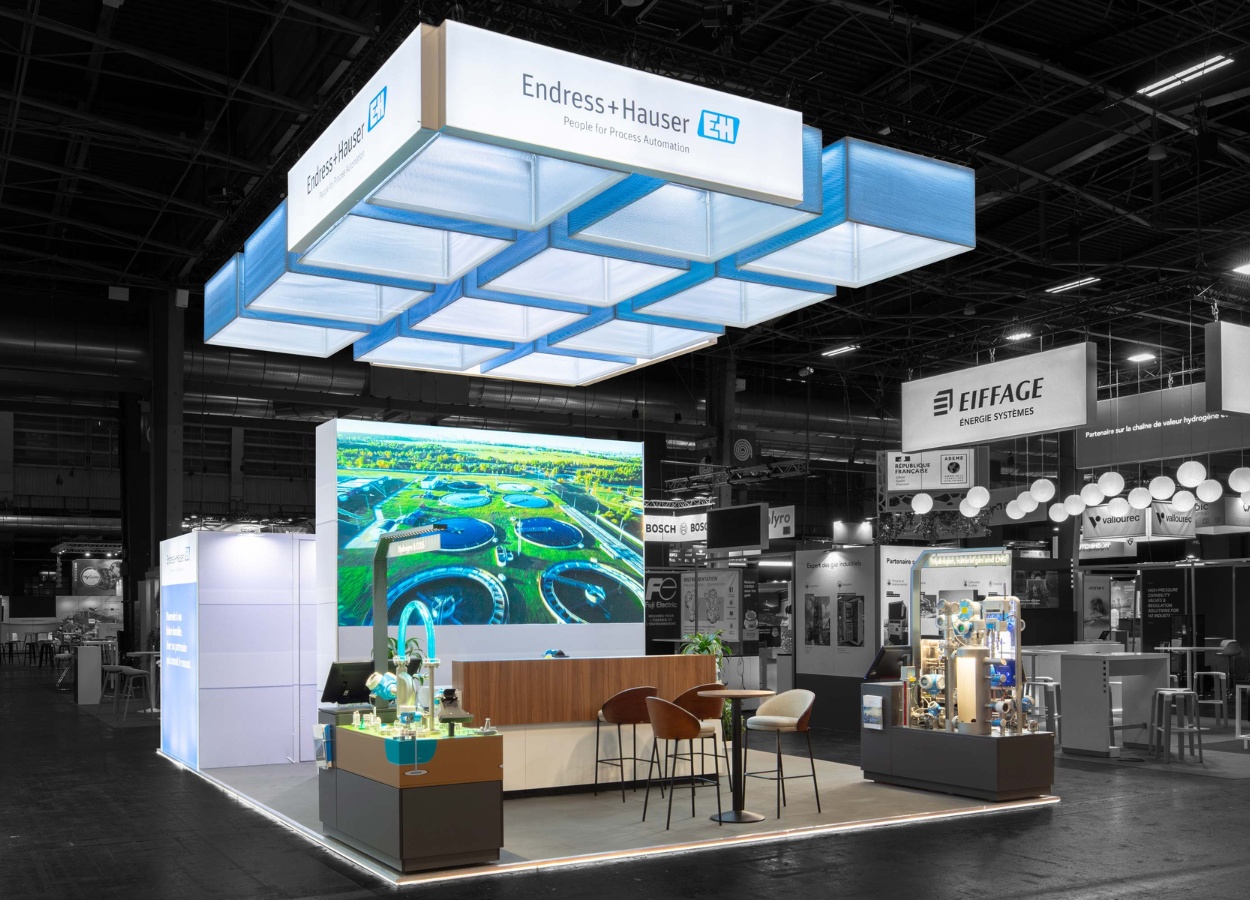
Verticality is a powerful tool. A totem sign, a hanging sign, or a structural arch can increase visibility from a distance.
If the visitor doesn't immediately understand who you are and what you offer, the impact is lost.
Modularity makes it possible to incorporate these architectural elements while maintaining a reusable structure.
Many companies think that personalization is only about graphic printing.
In reality, effective personalization acts on multiple levels:
A striking stand doesn't just catch the eye.
It must guide, filter, and assist the visitor.
A high-performing booth functions like a mini-architectural space designed to guide a logical flow. Without this structure, even an aesthetically pleasing booth can become ineffective.
At a trade show, visitors move quickly. They scan their surroundings in seconds. Therefore, the primary mission of a booth is to be instantly readable.
An effective path is generally organized around four strategic areas:
The anchor zone
It must be visible from a distance.
This is where the crucial first three seconds are played out.
It includes clear main signage, a clear message, and sufficient height to stand out from the visual clutter.
The central focal point
This could be a flagship product, an LED screen, a demonstration, or an innovation.
This central point captures attention and encourages visitors to stop. It gives a concrete reason to enter the booth.
The exchange zone
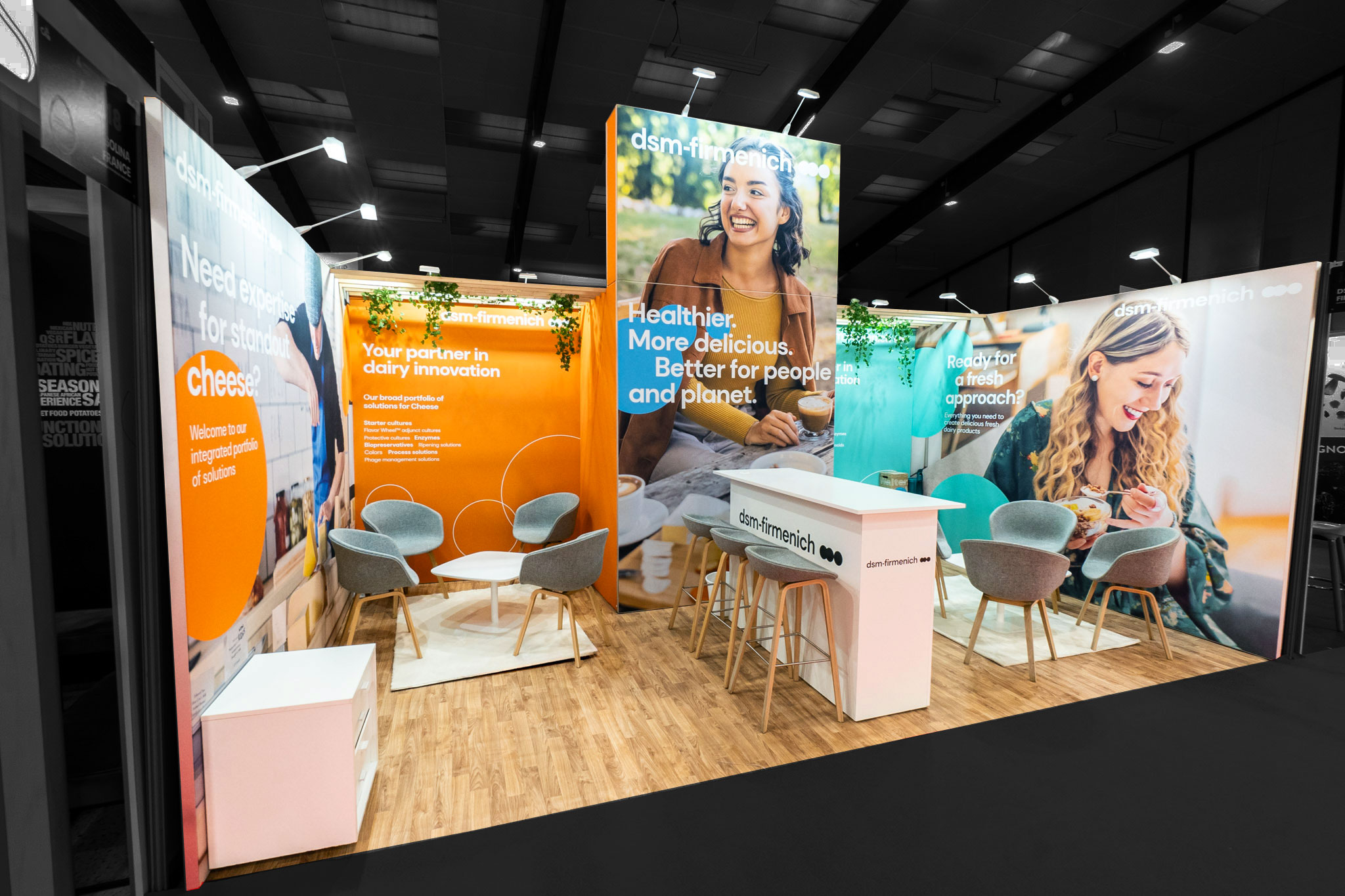
Once attention is captured, the space must allow for fluid exchange.
This implies unobstructed circulation, open spaces, and intelligently placed furniture.
The goal is to turn interest into conversation.
The semi-private space
At some trade shows, a more secluded space is strategic.
It allows for a more in-depth discussion, the presentation of a complex offer, or negotiation in a calmer environment.
A well-designed modular stand allows these areas to be integrated without excessively partitioning the space.
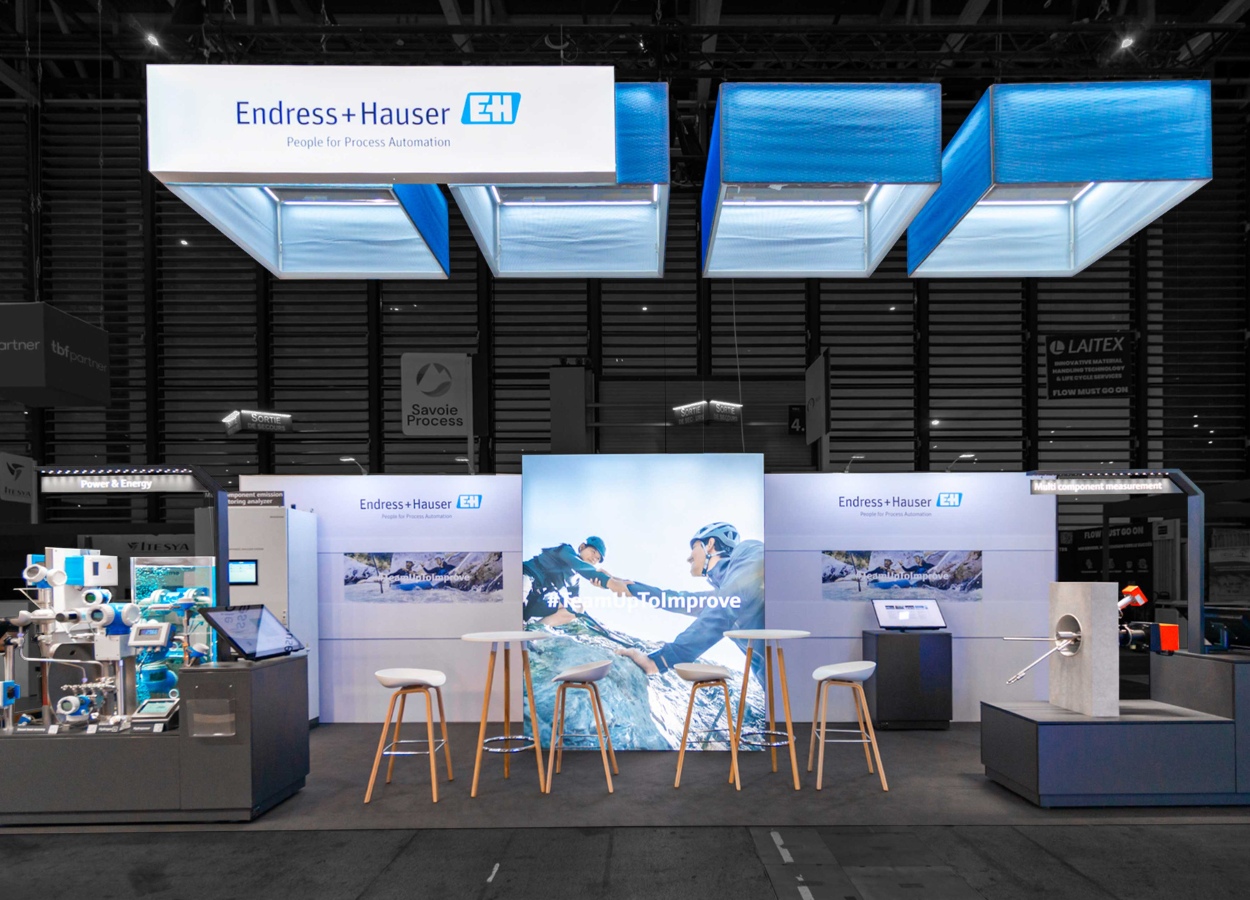
The strength of modularity lies in its ability to maintain path consistency, regardless of the surface.
South 9 sq m, the structure must be compact: the staging area and focal point often merge. Circulation is direct and frontal.
South 18 square meters, we can begin to create a light separation between demonstration and exchange. The depth becomes exploitable.
South 36 m² and more, it is possible to introduce a more defined spatial hierarchy: immersive zone, lounge space, integrated pantry.
The implementation evolves, but the strategic logic remains constant.
It is this consistency that allows the brand to be immediately recognizable from one show to another.
An effective stand is not just aesthetically pleasing; it's designed to optimize commercial performance.
A good visitor journey allows for:
To increase the time spent at the booth
To improve the quality of exchanges
Streamline the work of sales teams
To maximize the number of qualified leads
Modularity offers a key advantage here: it allows for the replication of a proven functional organization across multiple events while adapting the dimensions.
Therefore, an impactful stand is one that articulates aesthetics, traffic flow, and commercial efficiency within a single setup.
An impactful stand uses:
Light contrasts
Product highlights
Indirect lighting
More intimate areas
Light attracts the eye, creates an atmosphere, and structures space.
A modular system allows these devices to be integrated without complicating installation.
In 2026, a high-performance stand often integrates digital tools:
Large format LED screens
Interactive Demonstrations
Visitor data capture
Animated presentations
Modularity facilitates the progressive integration of these technologies.
You can start with a simple premium structure, then integrate:
A screen the following year
An additional demo space
A product extension
Investment is becoming scalable.
📌 Read also: High-end modular stands in 2026: how to reconcile premium image, flexibility, and profitability?
Consistency isn't just about colors or logos. It pertains to architecture, volumes, height, how space is structured, and how the company physically presents itself within its competitive environment.
At trade shows, Memorization plays a central role. A visitor can encounter a brand multiple times throughout industry events.
When the stand's architecture remains identifiable, even if the surface area changes, the brand becomes immediately recognizable. This visual recognition speeds up contact and strengthens perceived credibility.
A well-designed modular structure allows for the creation of a true architectural signature:
A logic of volumes
A dominant height
A space organization
Light codes
An efficient stand preserves, from one trade show to the next:
The same brand positioning at a higher level
The same focal point produces
A similar space organization
Identical reception logic
This structural stability reassure and professionalizes the company's image.
Modularity allows for dimension adjustments without altering the internal logic. Thus, a 36 m² stand can be adapted into an 18 m² version while retaining its fundamental architecture.
An impactful booth also needs to be rentable.
Modular design allows for:
Frame reuse
Adaptation to variable surfaces
Cost reduction in logistics
Amortization over multiple trade shows
A striking stand isn't necessarily more expensive: It's better thought out.
To study a project suitable for your strategy
Designing an impactful modular stand means thinking of space as a strategic tool: serving commercial objectives, consistent with brand image, and effective across multiple trade shows.
Architecture, readability, visitor experience, functionality – every component counts. And modularity, far from being a constraint, is precisely what allows for investment optimization and evolution over time.
In this FAQwe answer the most frequently asked questions about modular exhibition stands The advantages, environmental impact, ease of installation and much more.
The Custom stand is particularly suited for large international trade shows, strategic launches, and events requiring a strong scenography.
The Modular stand This becomes relevant when participation is recurring, floor space varies, and annual budget optimization is sought.
The combination of the two approaches allows for the construction of a balanced event strategy, in which each solution meets a specific objective.
The cost-effectiveness of a modular booth depends mainly on its ability to be reused at several trade shows over the course of several years.
The initial investment is thus amortized over a significant number of uses. For example, a stand used at several trade shows during the year can quickly reduce its cost per event compared to a design that is entirely renewed for each participation.
This amortization logic allows companies to transform a one-time expense into a strategic investment, while maintaining a high level of quality and visual impact.
Contrary to popular belief, a modular booth can be widely customized to reflect a brand's identity and objectives.
The modular structure serves as the technical basis, but the visual and functional elements can be fully adapted. It is possible to integrate custom visuals, lightboxes, LED screens, demonstration areas, storage, or specialized furniture.
The modular stand naturally fits into a process of environmental responsibility.
By promoting the reuse of structures and modules, it limits the production of single-use materials. The extended lifespan of structural elements reduces waste generated after trade shows.
Furthermore, modular systems are generally designed to optimize transport and storage, which reduces the logistical impact. This approach contributes to more sustainable resource management and aligns with the CSR objectives of many companies that regularly participate in professional events.



©Stand Modulaire 2026 - Terms of use